We Dig It!
A hands-on, small-batch approach
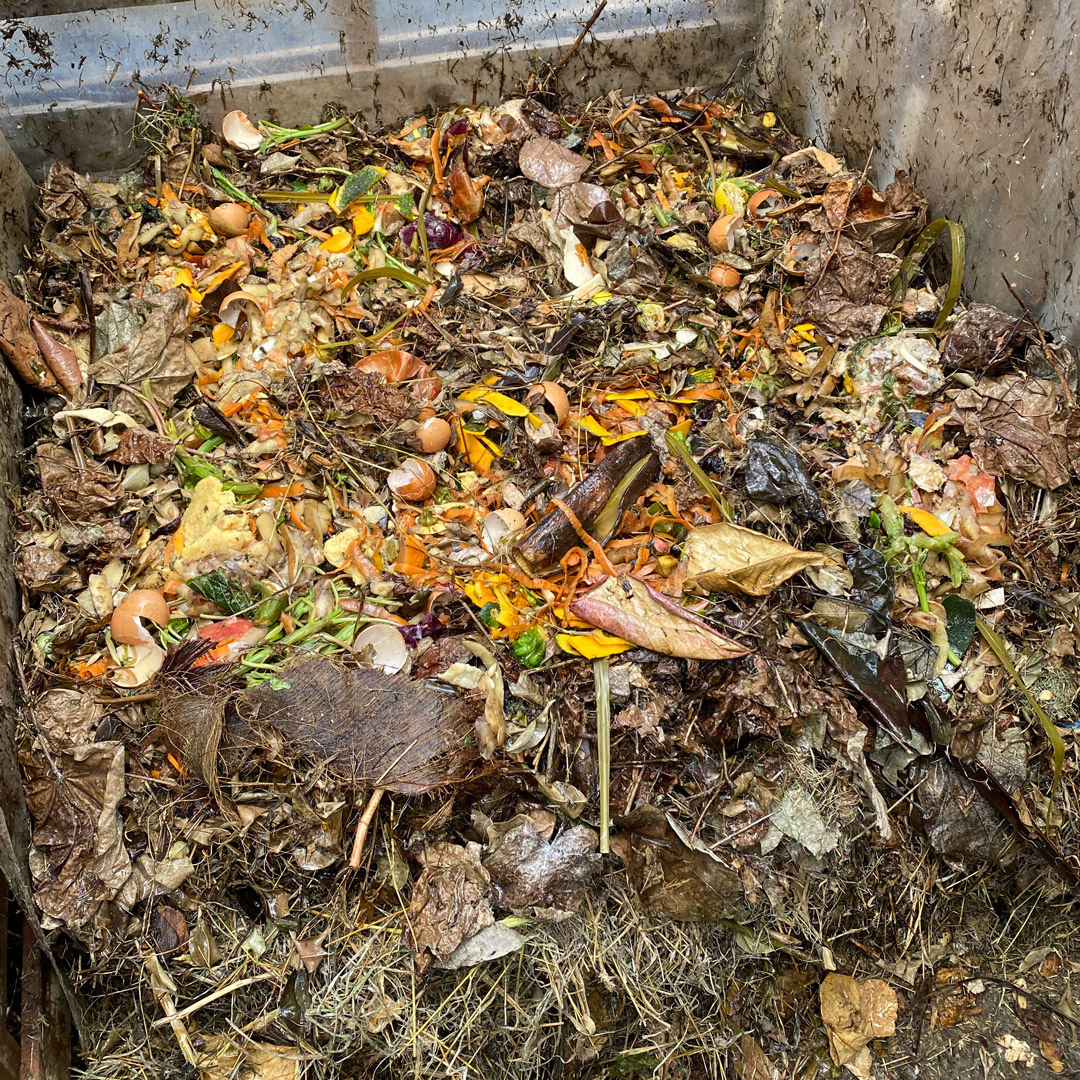
Right now, every batch of compost we produce is built the old-school way: layer by layer, pitchfork in hand. We sort incoming yard waste and food scraps from local homes and businesses, making sure nothing synthetic or harmful sneaks in. Then we carefully layer the materials – greens for nitrogen, browns for carbon – in open-air bays made from used and broken wooden pallets that we get donated from local businesses.
No heavy machinery. No conveyor belts. Just time, attention, and a lot of elbow grease.
We let biology do the hard work
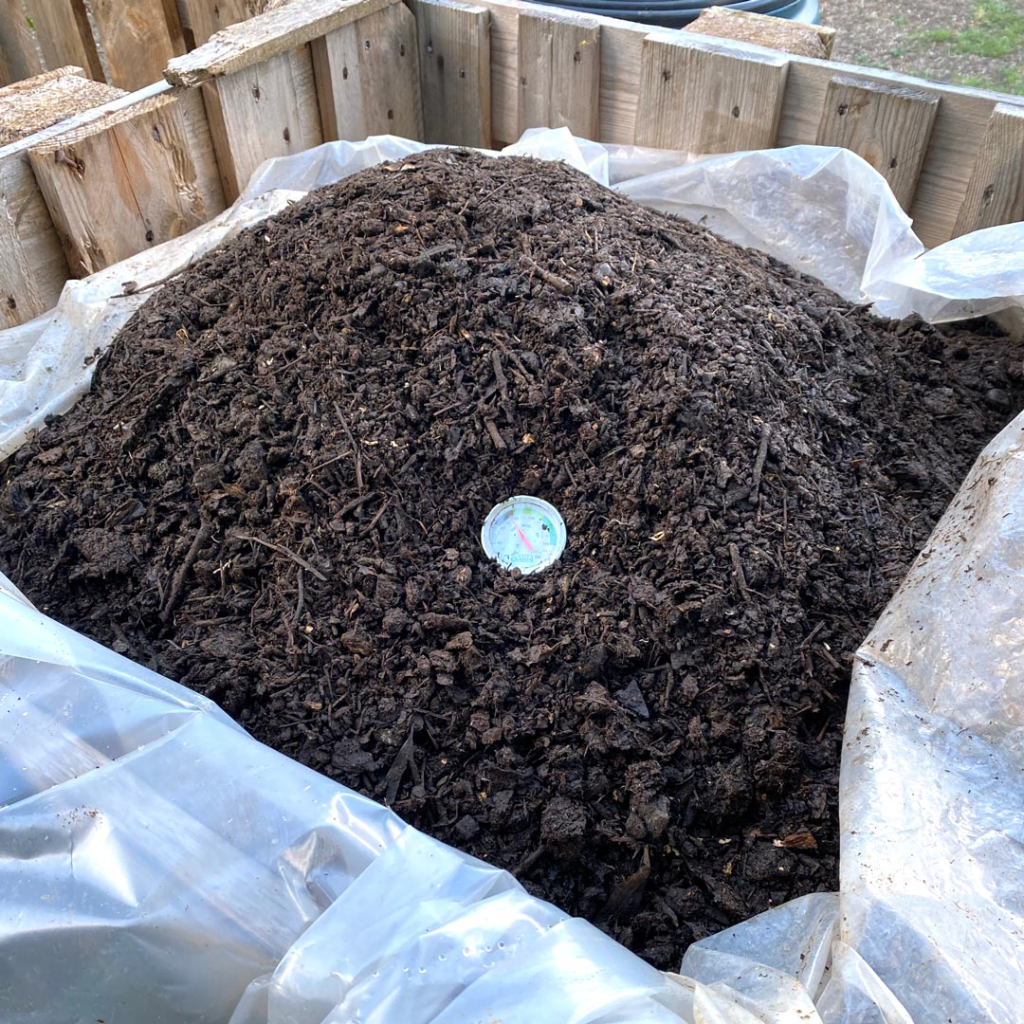
Once the piles are built, nature takes over. Microbes begin to break down the material, generating heat that sanitizes the compost and speeds up decomposition. Along the way, we monitor multiple aspects, including moisture and temperature, turning the piles with a pitchfork to keep oxygen flowing and fermentation at bay. Each batch is turned 10 to 12 times over the course of about 4 months.
It’s labor-intensive, but it works, and it shows in the quality of our final product.
Screened, bagged, and ready to grow
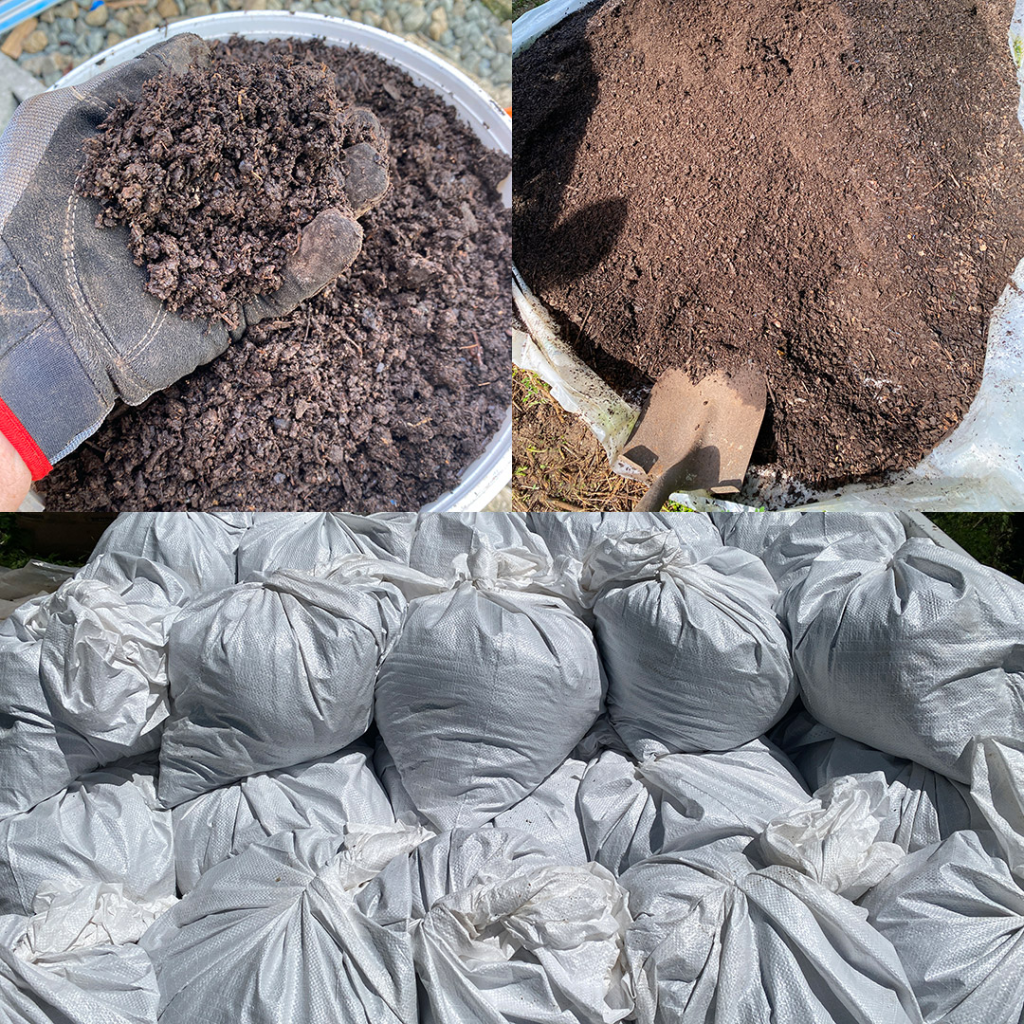
Once the active composting phase is complete, the material is screened to remove large chunks and woody bits, then it’s left to cure for 1 to 2 weeks so the material can stabilize. The result? A dark, earthy, nutrient-rich compost that’s perfect for gardens, farms, fruit trees, and potted plants. Each batch is bagged by hand and is often sold out before it’s even finished.
What's next? Scaling up
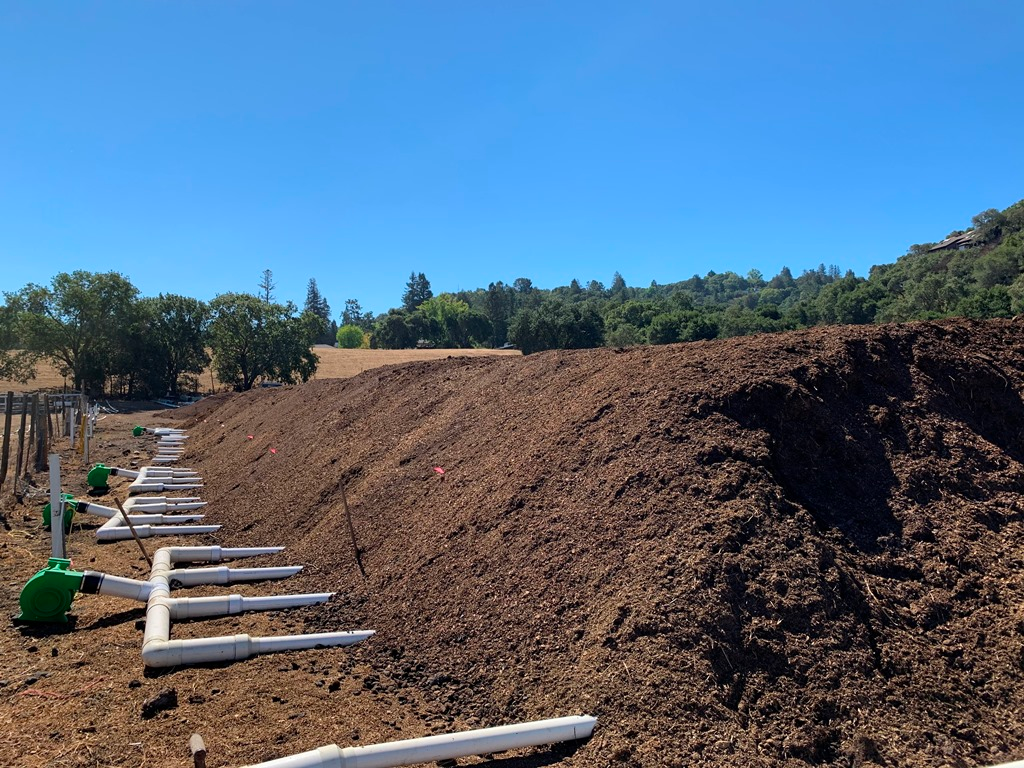
This method has served us well, but it limits how much we can produce. That’s why we’re preparing for the next step: a commercial-scale facility. This new facility will use the latest aerated static pile technology, mechanical screening, and loaders to boost our monthly output from just about 2 cubic yards to over 400.
Same great compost, but a lot more of it, at a much lower price to the consumer.
Want to help make that future a reality?
Learn more about our compost expansion and investment opportunities.