
Hi there. Welcome to the twelfth segment in our series on the Life of a Batch. In this segment, we screen the batch. Yay!
Previously:
We walked through turn number nine, as it turned out, our final turn.
Today is Friday, May 22… 11 days since the last turn of the batch, and 109 days since we started the batch. Let’s get into it.
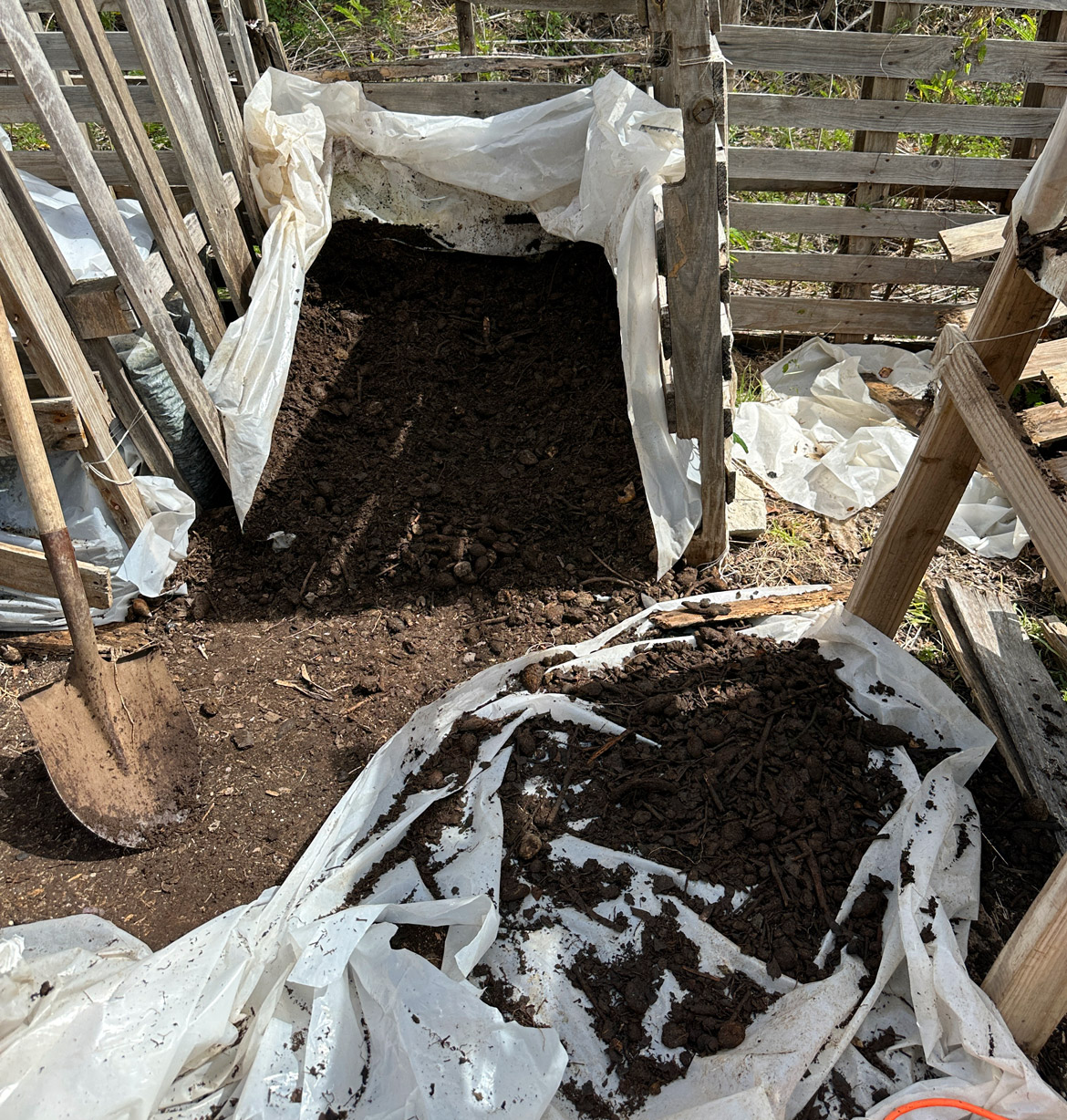
Unfortunately, I got into screening before taking a picture of the state of the batch. However, if you did see it, you’d probably say it looked exactly as it did at the time of the ninth turn… and you’d be right. During the last few weeks of production, the compost batch’s appearance doesn’t change much. So, you didn’t miss much by not having the current pic.
That said, here are the final stats before the batch gets screened… the day after the last turn, the temperature dropped to 96°F (36°C), an 8°F (4°C) drop from the day of the turn. This time, the compost reached its peak temperature just two days later, May 13, when it peaked at 99°F (37°C) and stayed there until today. As I believe we mentioned before, once a batch no longer goes over 100°F (38°C), it’s about as done as it gets, so it’s screening time.
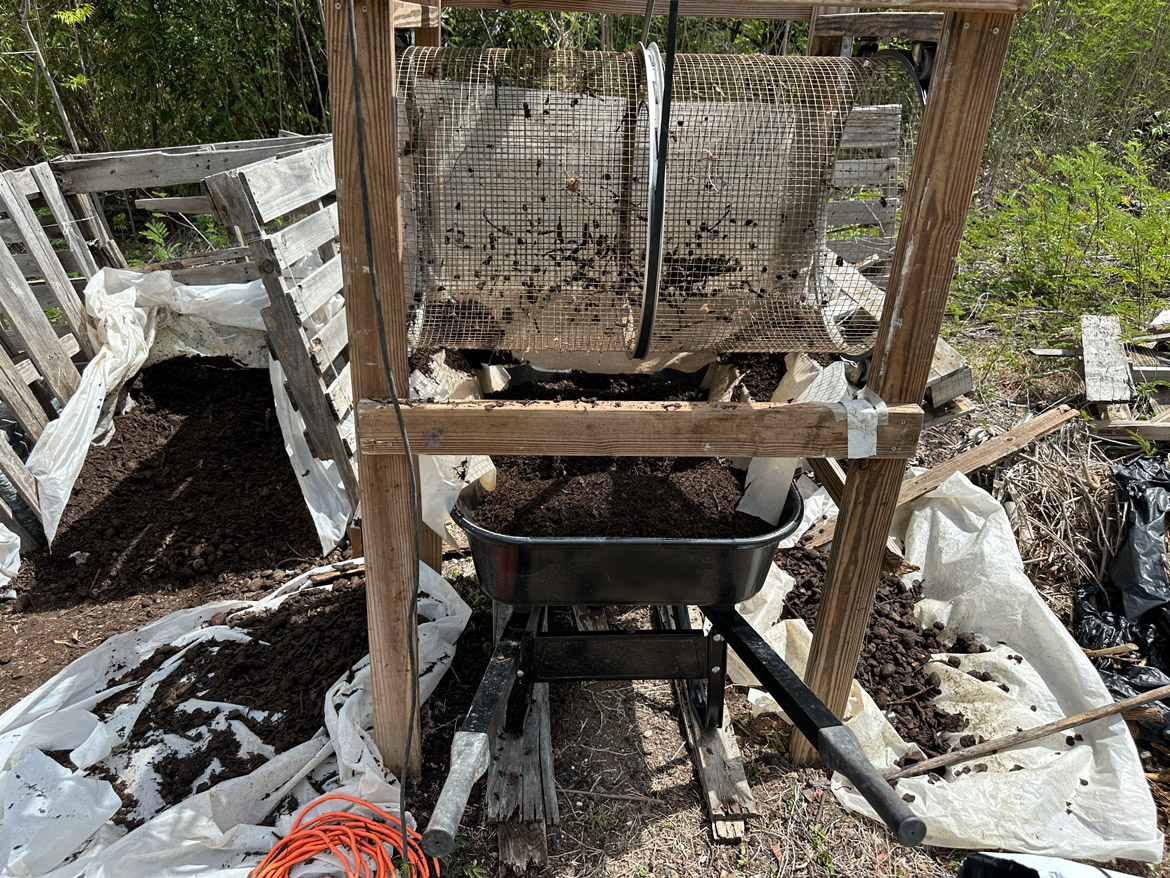
Here’s our screener. We built it ourselves from bicycle rims, construction mesh, two by fours, a cheap used motor we bought from a local shop, and some belts and pulleys to step down the RPMs. It’s not the prettiest machine in the world, but it does the job 🙂
You can go to our Instagram account to see a video of the screener in action (https://www.instagram.com/p/DCUpBvgI4SM/).
It works by shoveling the material into one end while the mesh cylinder is rotating. The material tumbles inside the cylinder, the smaller screened compost bits falling through the mesh into the wheelbarrow, while the larger chunks, known as “compost overs” fall out the sides onto the plastic. The overs can be returned to the beginning and added to a new batch, but we use them as mulch in our garden.
 ‘
‘
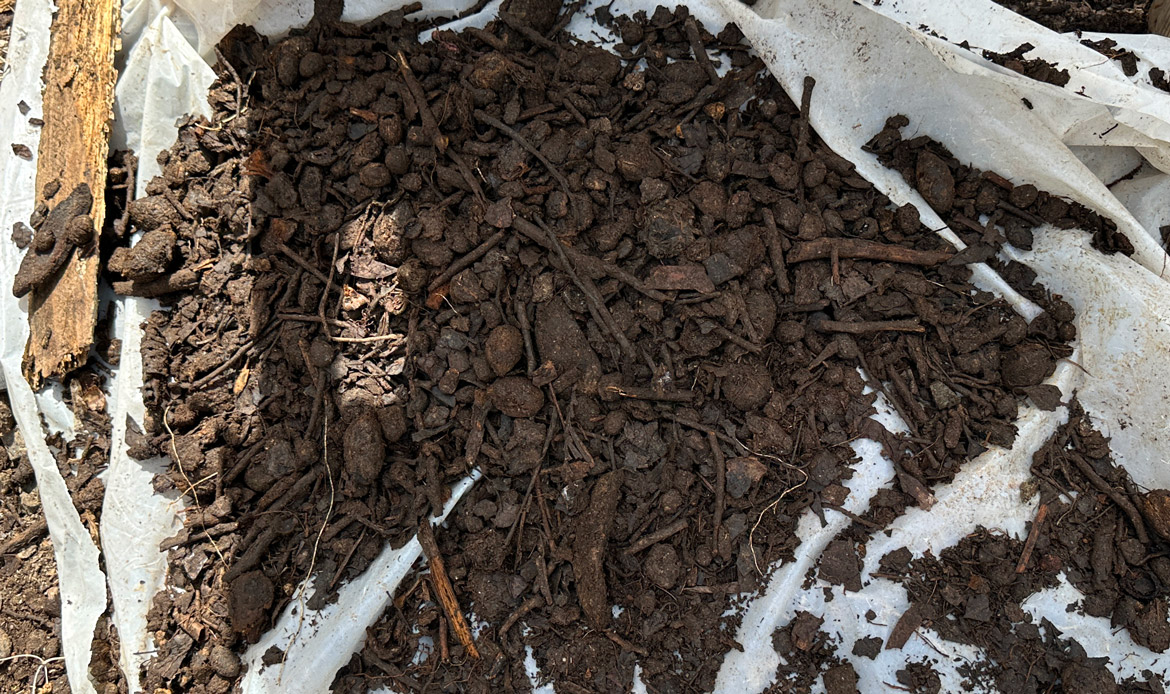
Here’s a close up shot of the overs. It’s a lot of sticks, larger seeds, like mango and avocado, as well as chunks of who-knows-what that didn’t break down during the compost process. Quite often, there are also some rocks and bits of trash in there as well.
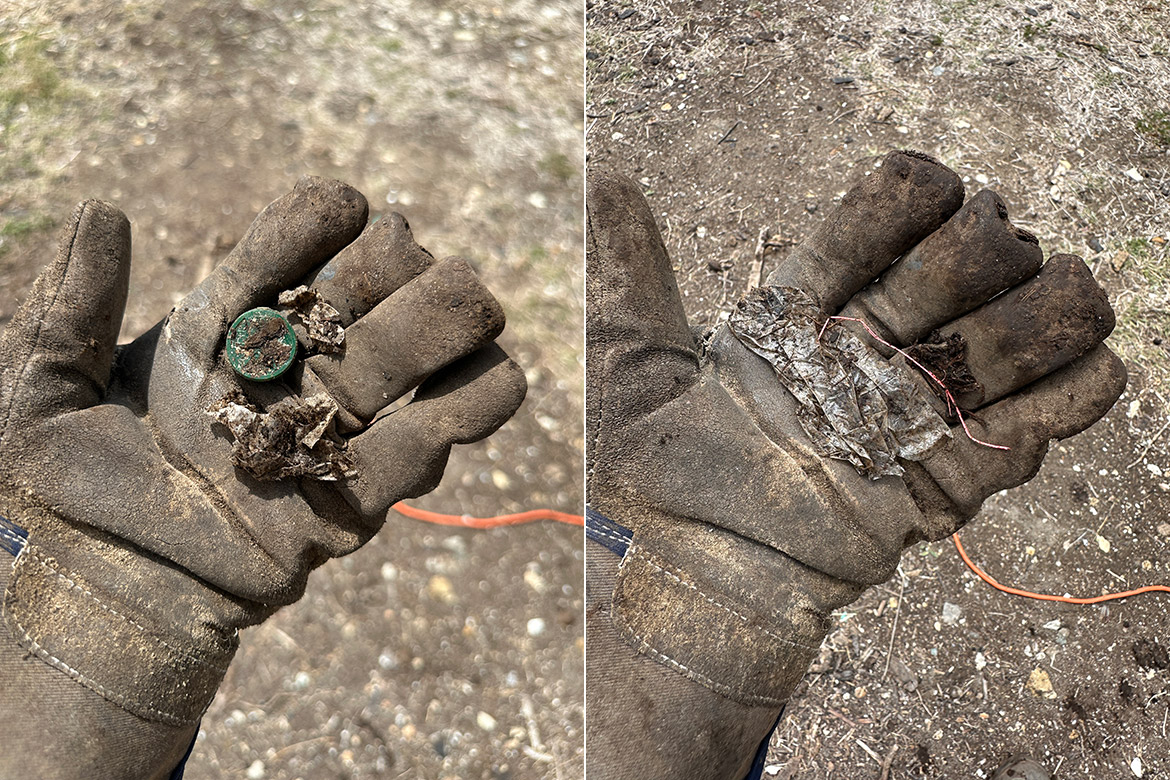
Speaking of trash, even at this late date, after assembling the pile and nine subsequent turns, we’re still finding bits of trash in the pile. Just another reminder of how ubiquitous trash is, and the importance of separating it out at the source.
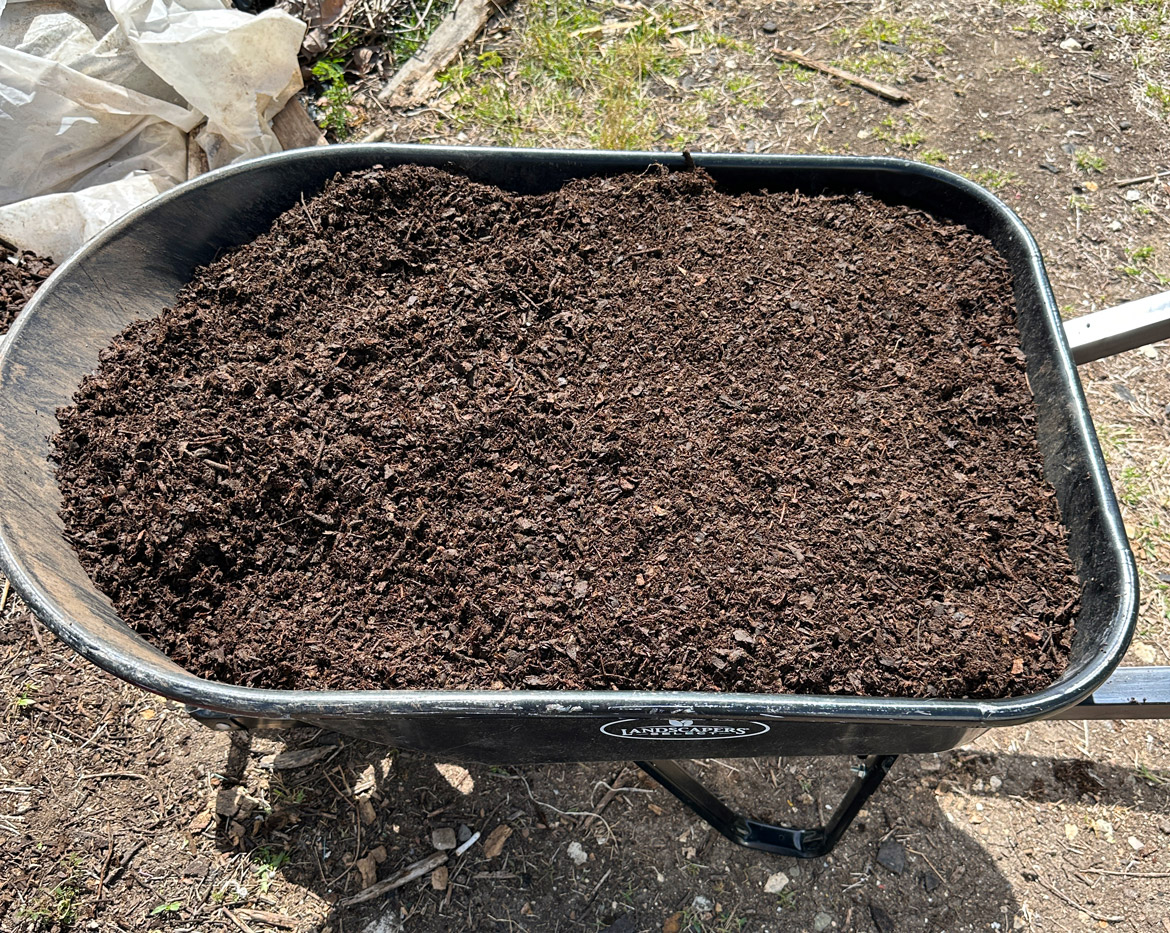
Here’s what the compost looks like when it comes out of the screener… light and fluffy, with all the junk removed.
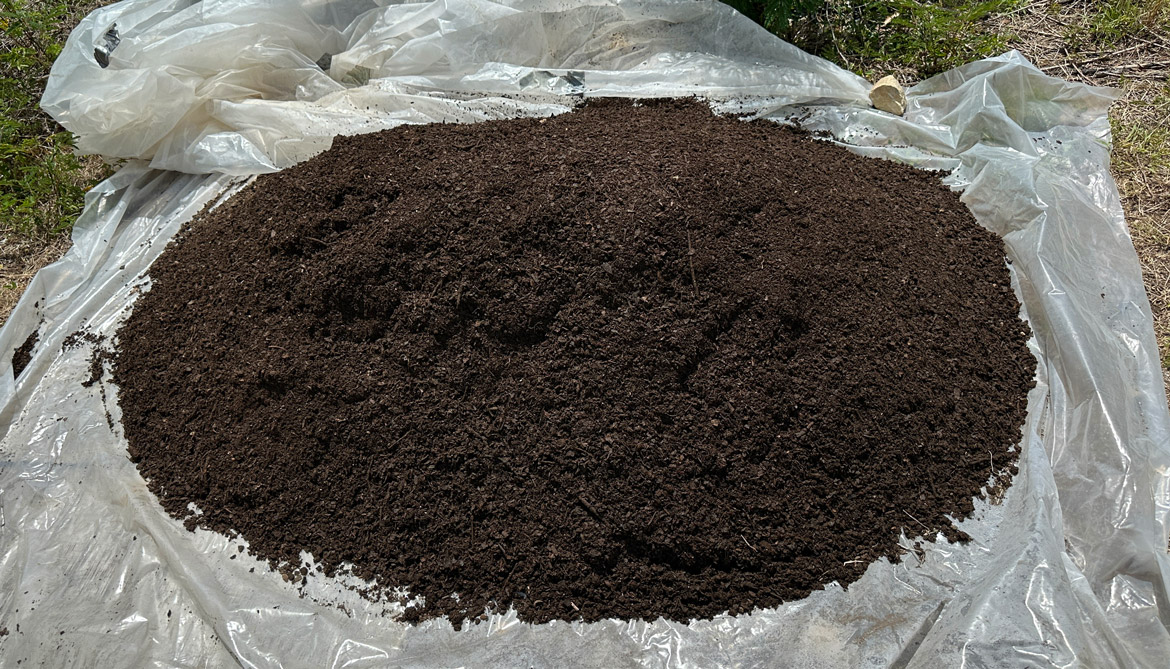
As each wheelbarrow load fills, we move the material to our curing area where it will sit for a week to cure. Curing allows the compost to chemically stabilize and mature, improving nutrient availability, and normalizing pH and moisture levels.
Technically, once the batch doesn’t go above 110°F (43°C) any more, the curing and maturation process begins. So, we could say that the batch has been curing for a couple weeks already. But we like to give the compost one last week to cure after screening, before it’s bagged.
By the time we finished screening the batch, we ended up with about 4.5 wheelbarrows full of screened, finished compost. So, we’re estimating about 15 bags when it comes to bagging time.
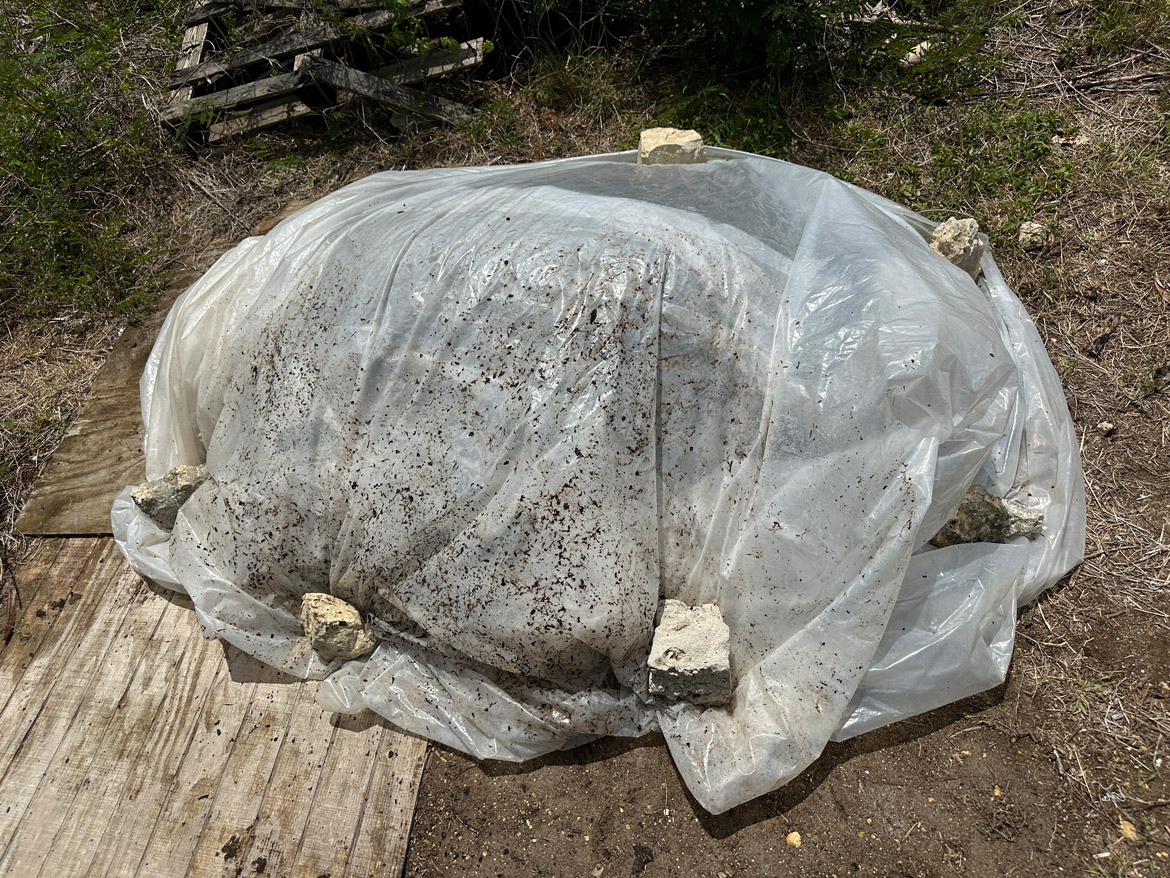
And here’s the batch… screened, covered, and protected, where it will stay until next week when we bag it.
Next up:
Bagging. Time to get the compost into the bags so we can get it to our customers.