
Hi there! Welcome to the third segment in our series on the Life of a Batch. In this segment, we’ll walk through the first time we turn the compost batch.
Previously:
We talked briefly about how we monitor the progress of a batch.
Today is Wednesday, February 11. It’s been 9 days since we started the batch. When we built the batch, we focused on layering the materials into the bays, wetting it, and compressing in as much material as we could. Today, we’ll open it up, and give the batch its first mix as we move it into the next pair of bays.
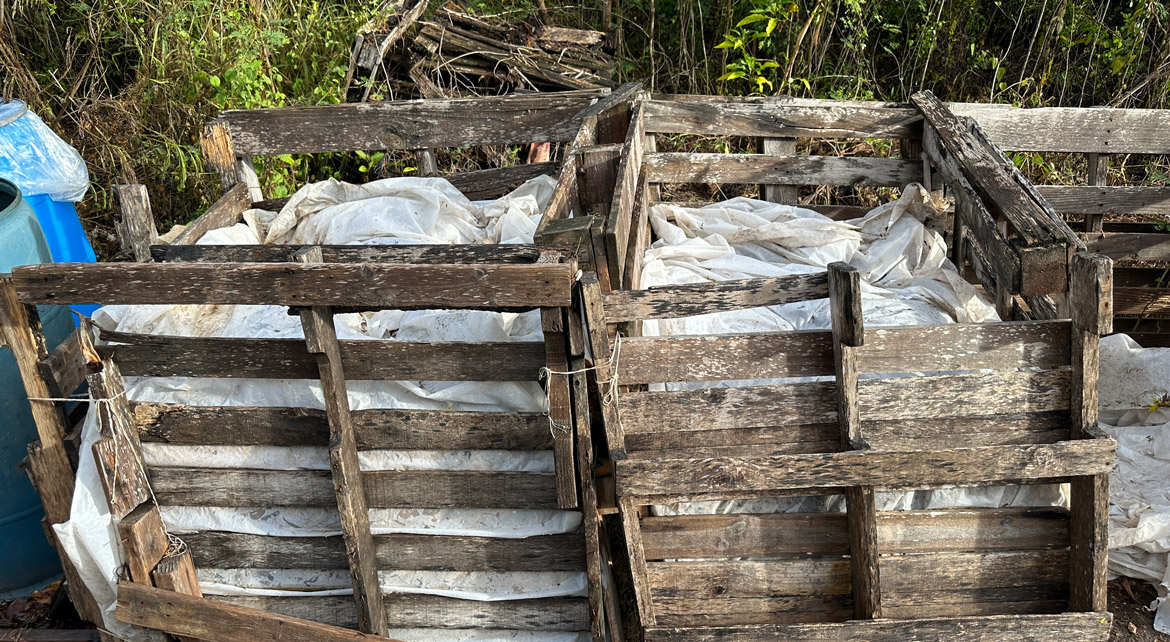
As you can see, the batch has shrunken even further since the pic we took for the monitoring post, 5 days ago. Batches will shrink a lot during the first few weeks, then the shrinkage slows once the material becomes more broken down.
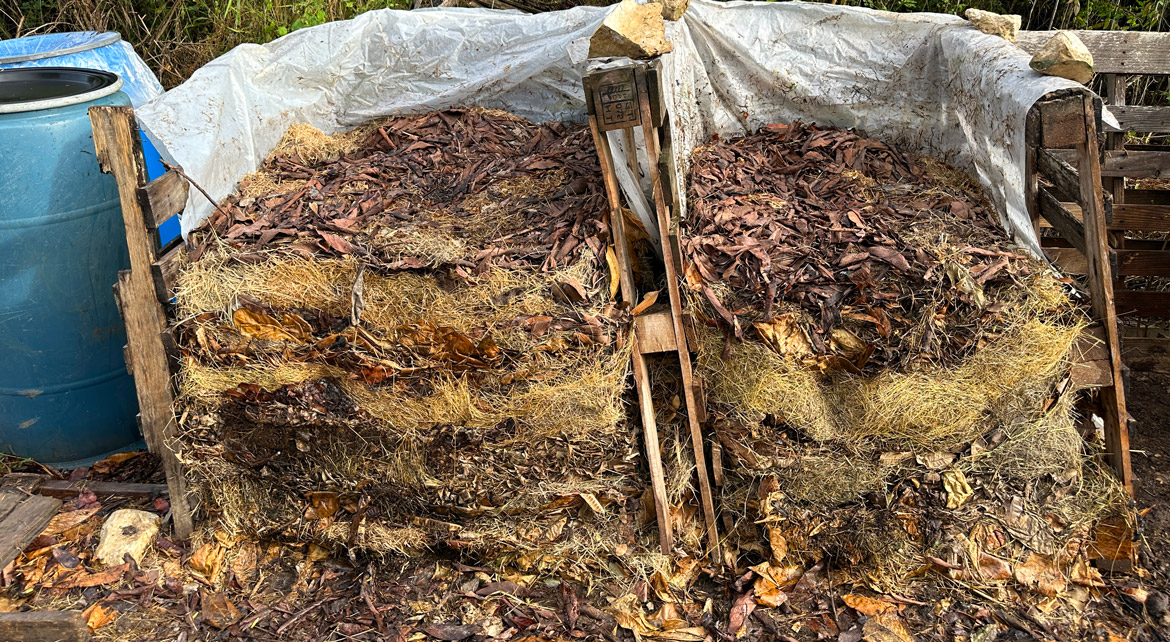
Once we remove the front pallet and peel back the plastic, you can see the layers from when we built the batch. If you look closely, you can see that parts toward the center appear more moist, whereas the material in the corners appears drier. This is completely normal, as the material at the corners has more exposure to the air.
The two main things we’re looking to do with this first turn is, mix the material and wet the material. Remember, aside from the raw materials, those microbes need water and air to thrive, so each time we turn the batch, we make sure they get plenty of both.
Another thing we check for as we go through a batch, especially one in the early stages like this one, is the smell. Only nine days in, you can still expect to smell hints of the food that went in: vegetables, greens, even fruit. But if things are going well, it shouldn’t be a rotten smell. It should be more like an old version of the actual food itself. It’s a little hard to explain without smelling it yourself, but if it smells rotten, or sulfur-like, that means something is out of balance. It’s rare, but when this happens, it’s from too large a clump of nitrogen-rich material in one place. Breaking it up and mixing it in with the rest of the material solves the problem.
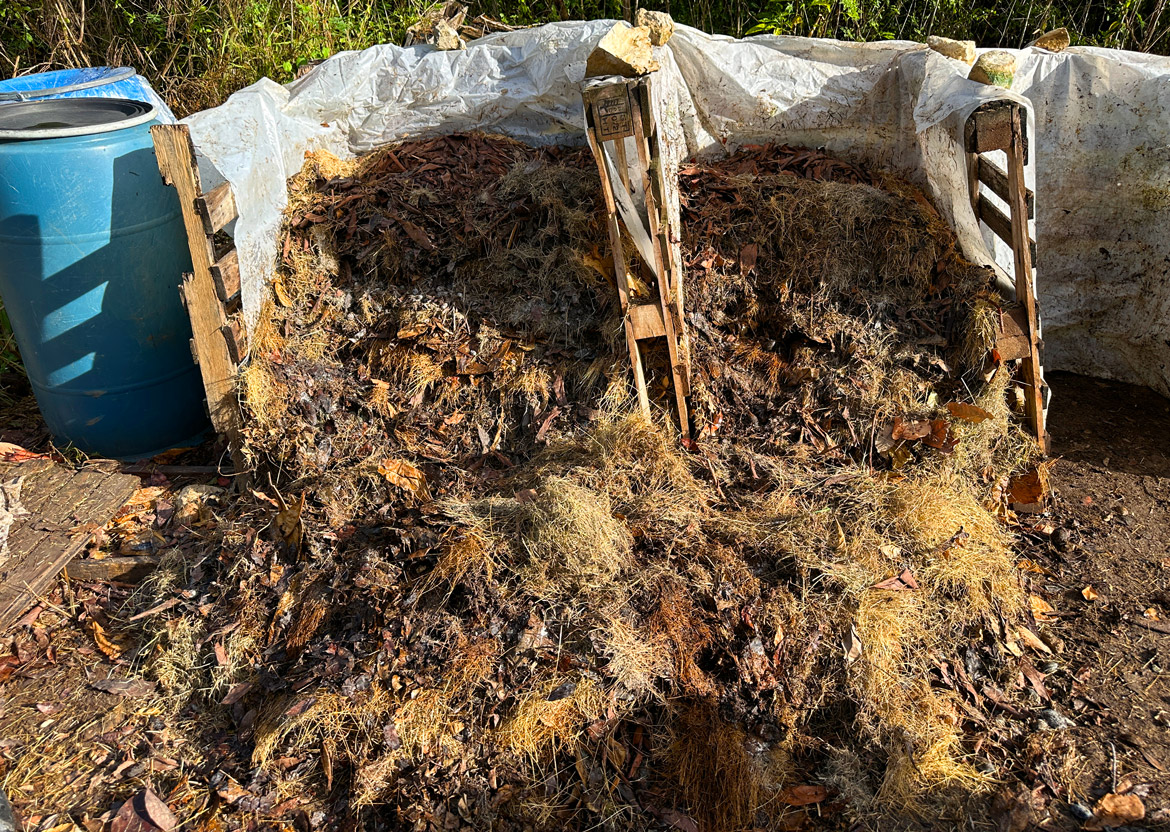
Since a key part of this first turn is mixing the layers of material, we use the pitchfork to scrape down the layers. That way, different layers can be mixed together in front of the bays before the material is shoveled into the next bays. This also helps material that was on the outside of the pile make its way to the inside, where more of the microbial action occurs. In this way, everything in the batch gets to break down at a more consistent pace.
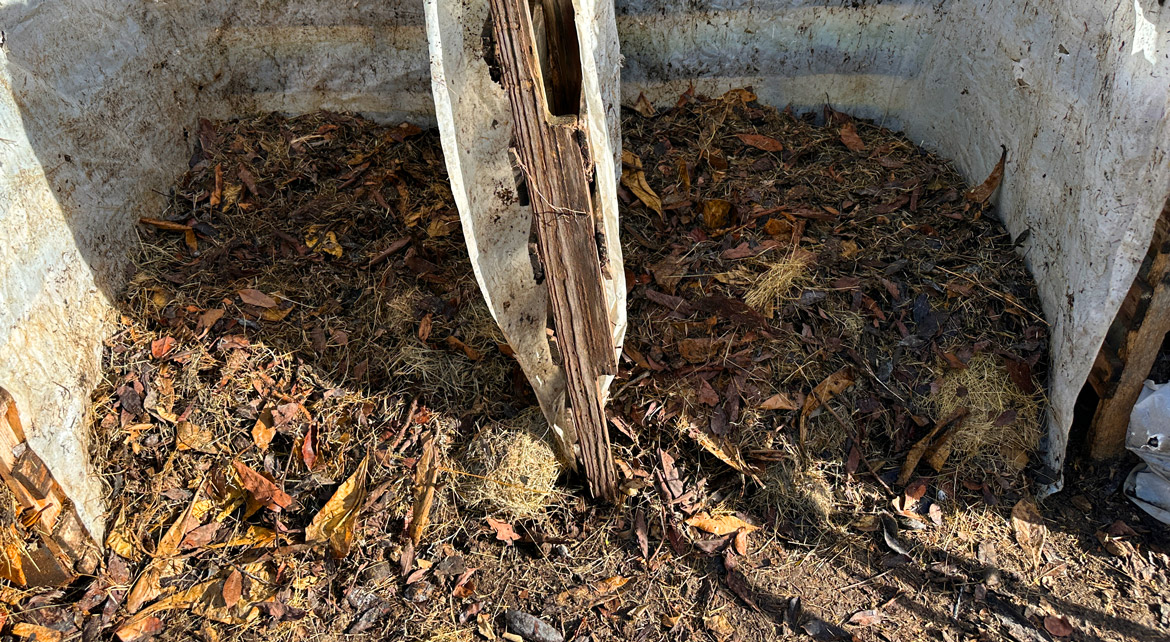
You can see that the material is well mixed as it goes into the next two bays. Similarly to when we built the batch, we’ll water the material frequently as we move it into the second pair of bays. Also, since the material hasn’t broken down much yet and the particle size is still quite large, we’ll compress it down with our boots, or tamp it down with the pitchfork several times during the turn to make sure the material is well pressed together.
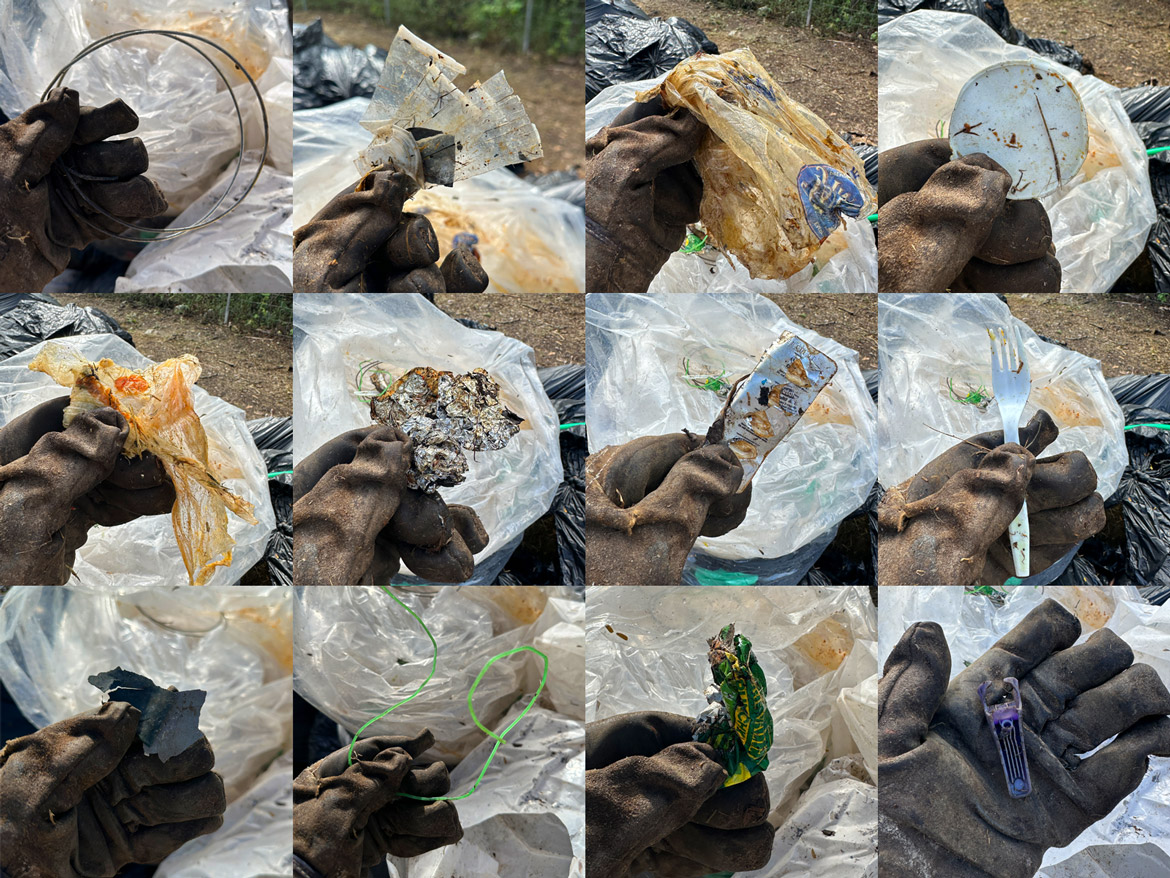
Of course, a constant in the compost business is trash. Hard to believe, but we pulled out all of these pieces of trash, along with a few others, just while turning this batch today. We also pulled out multiple pieces while we built the batch, and we’ll likely pull out more pieces during each subsequent turn. If you bag your yard waste, or collect your food waste for us, please do what you can to keep the trash out.
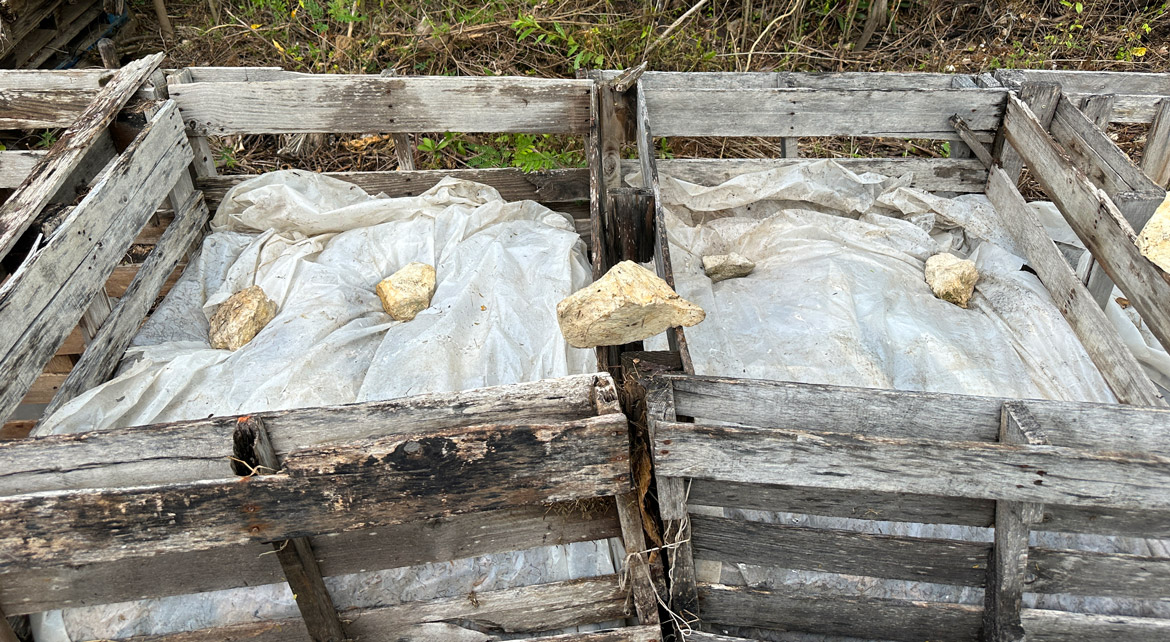
Once all the material is mixed, moistened and moved to the new bays, we wet it down one final time, cover it over with the plastic, and place a couple rocks on top to compress and hold everything in place. Now it’s back to our monitoring regimen, until it’s time to turn the batch again in about 10 days or so.
When we started the day, the temperature in the left bay was 144°F (62°C) and the right bay was 151°F (66°C). We’ll check temperatures tomorrow, but they’ll likely be 10-15 degrees lower. The reason being, opening and mixing the material allows heat to escape, and wetting it cools it down as well. Not to worry though, our little microbe friends will quickly get back to work and we should see things heat back up fairly quickly over the next few days.
Update: It’s Thursday, February 12… about 24 hours later and the temperature of the new mixed left bay is 135°F (57°C) and the right bay is 142°F (61°C). So, we got our temperature drop, as expected. That should quickly recover though, as our microbial friends get back to work.
Next up:
The big combine! This is when we take the two bays of material and mix them together into one bay.