
Hi there! Welcome to the fourth segment in our series on the Life of a Batch. In this segment, we’ll walk through the second time we turn the batch, mixing the two bays into one.
Previously:
We went through the first time we turn the batch.
Today is Monday, February 23. It’s been 21 days since we started the batch. In the beginning, the batch occupied two full bays. Now, three weeks in, it has shrunken enough that we can combine it all into a single bay.
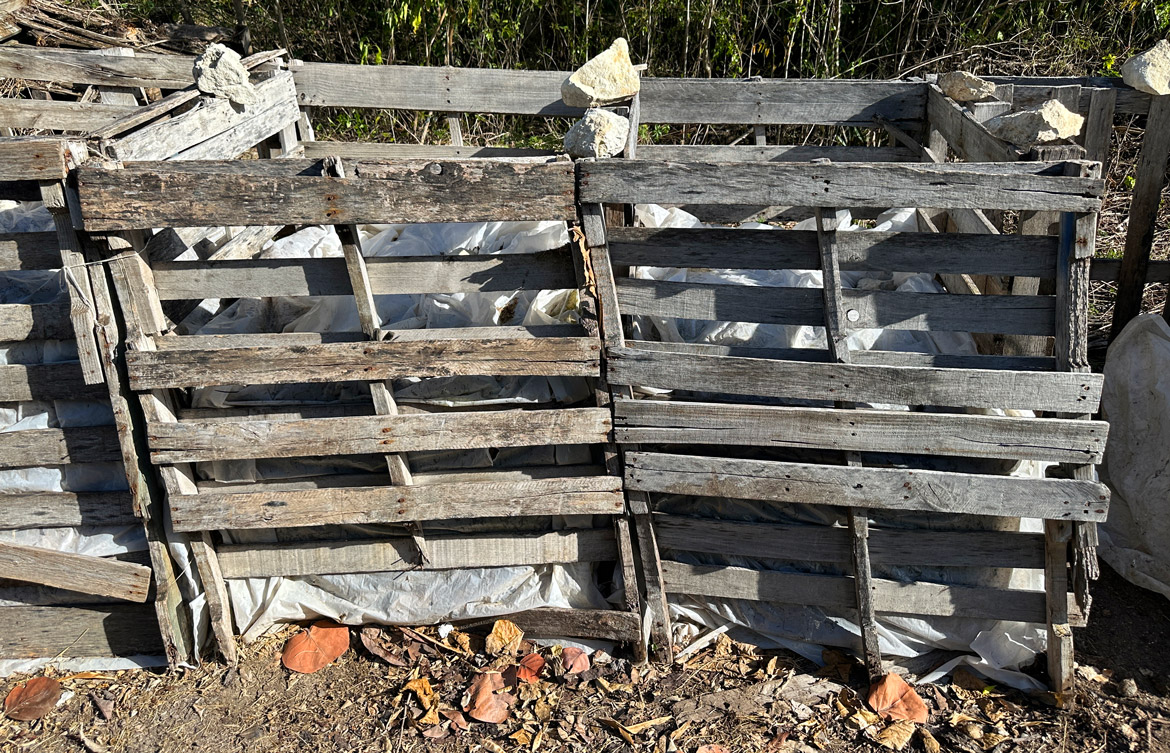
As you can see, the batch has shrunken even more. It’s looking only a little more than half the height of the bay now – a sign that it’s ready to combine into one bay. There are a couple reasons we want to combine these two bays together. First, of course, is space. We can have more active batches in a smaller row of bays if we combine them into one. More importantly though, the size of the pile can effect how fast it breaks down. Microbes in the thermophilic phase are most active at the core of the batch, and once a pile gets below about three feet tall, the microbial activity can start to slow down. Combining them into one bay makes for a larger core area, and keeps those little microbes humming along at peak efficiency.
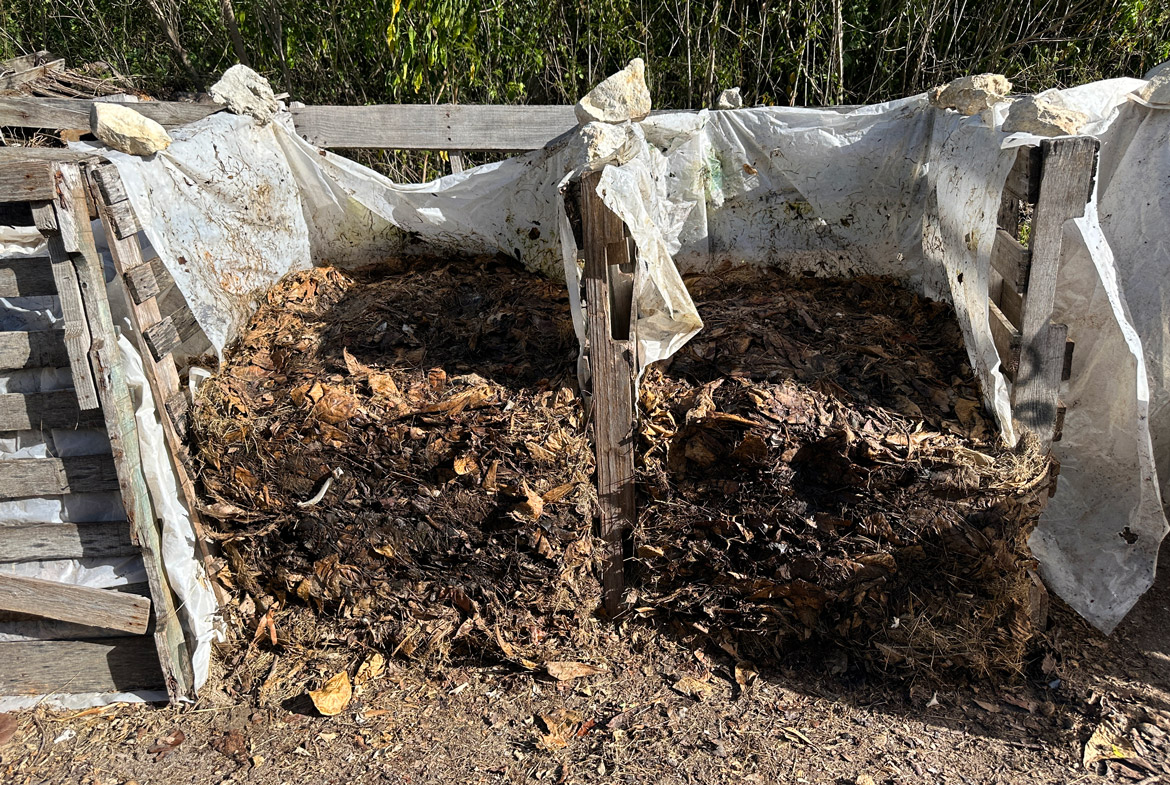
Once we uncover the material, you can see that it’s starting to look more homogeneous. Since we mixed our layers together last time, the material is intermingled, so the microbes start really getting busy.
As an example of how the microbes prefer when the material is mixed… before we mixed the material into these two bays 12 days ago, the temperature of each bay was 144°F (62°C) and 151°F (66°C) respectively. Since then, the bays peaked four days later at 150°F (66°C) and 154°F (68°C), and even today, they’re still at 145°F (63°C) and 147°F (64°C), comparable to where they were 12 days ago. Once we combine the two bays together into a single, larger batch, we should really see some increased activity.
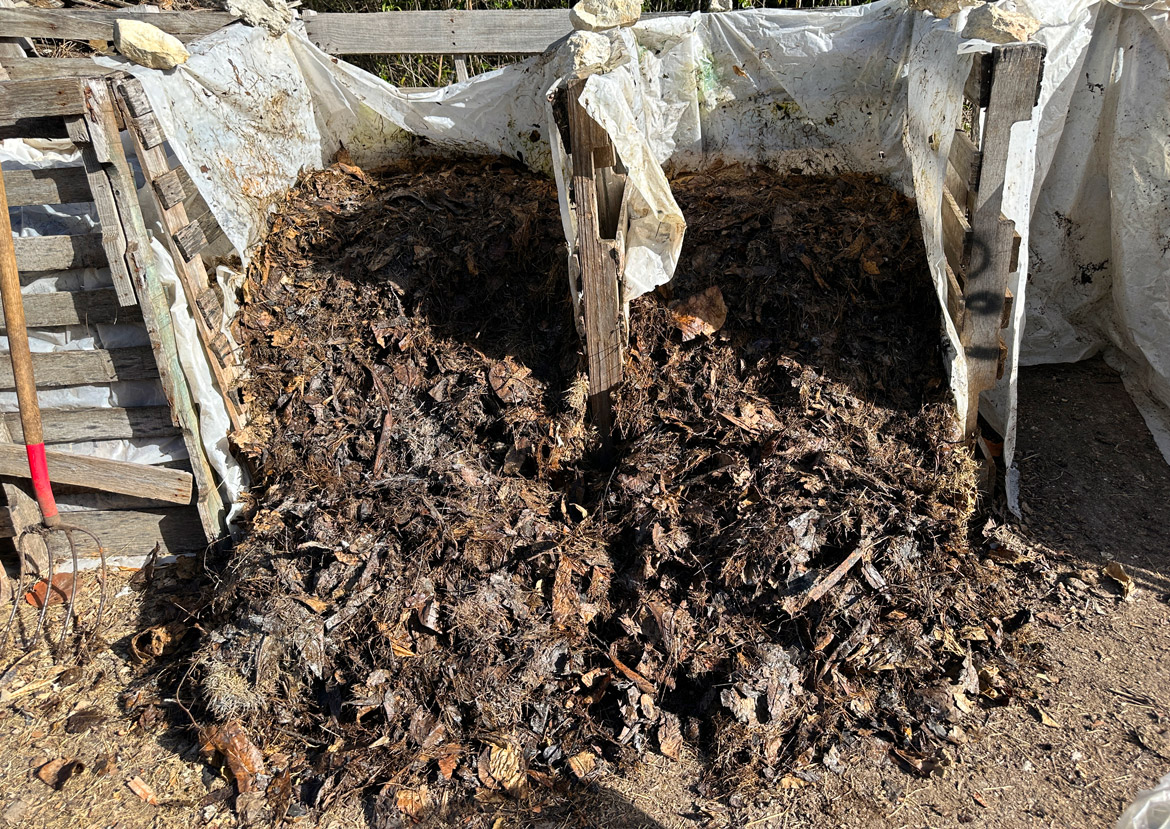
We use the same methodology as we did the last time we turned the pile. We scrape down the side, so material that was on the outside can be mixed with material that was on the inside, and everything can get a chance to be in the core of the pile where more of the microbial activity occurs. Of course, we make sure any clumps are broken up, and we add a light amount of water throughout as well. We need to keep the material well aerated and moist, so those microbes are happy.
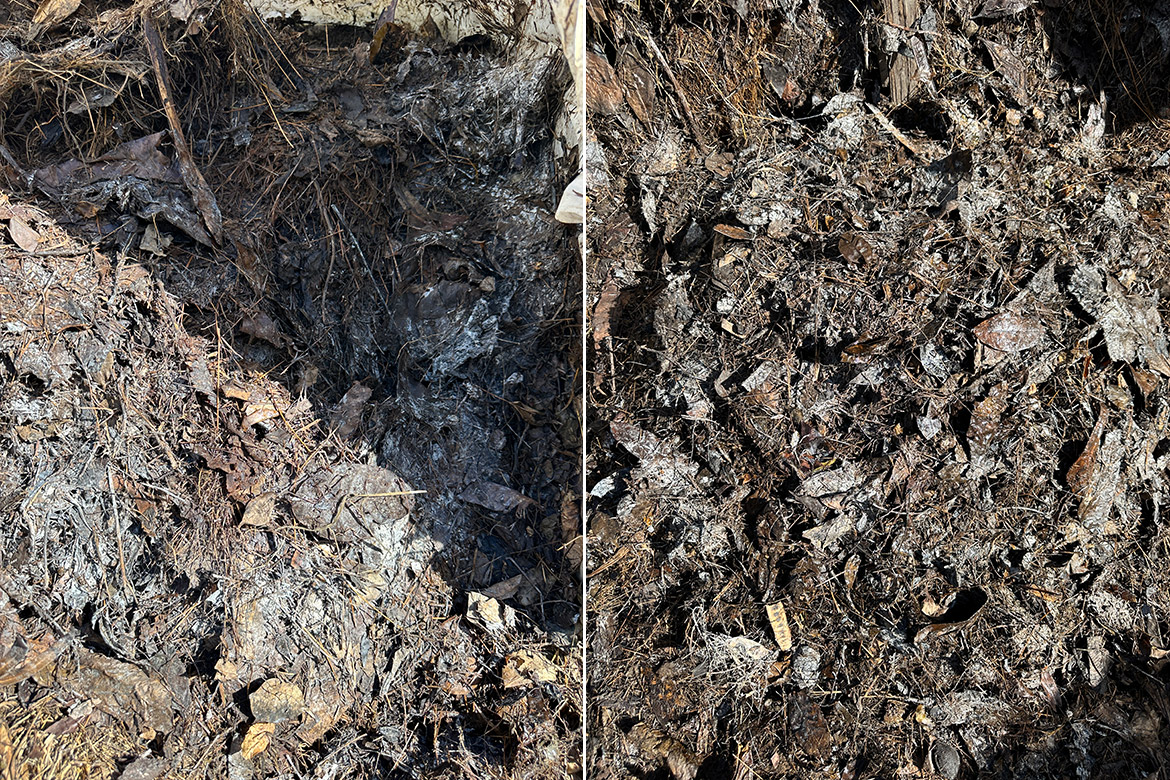
One thing we love to see in our compost batches, once they get going into the hot phase, is this white powdery stuff. It looks a bit like mold or dust, but it’s actually a family of bacteria called Actinomycetes. These bacteria are very important to breaking down the tougher material in the pile, so we love to see them. In fact, there’s an exceptional amount visible in this batch so far, which is a sign that things are moving along really well. These little guys are also responsible for releasing a natural compound called Geosmin, which is what gives compost that nice earthy smell. Yet another reason we like having them around.
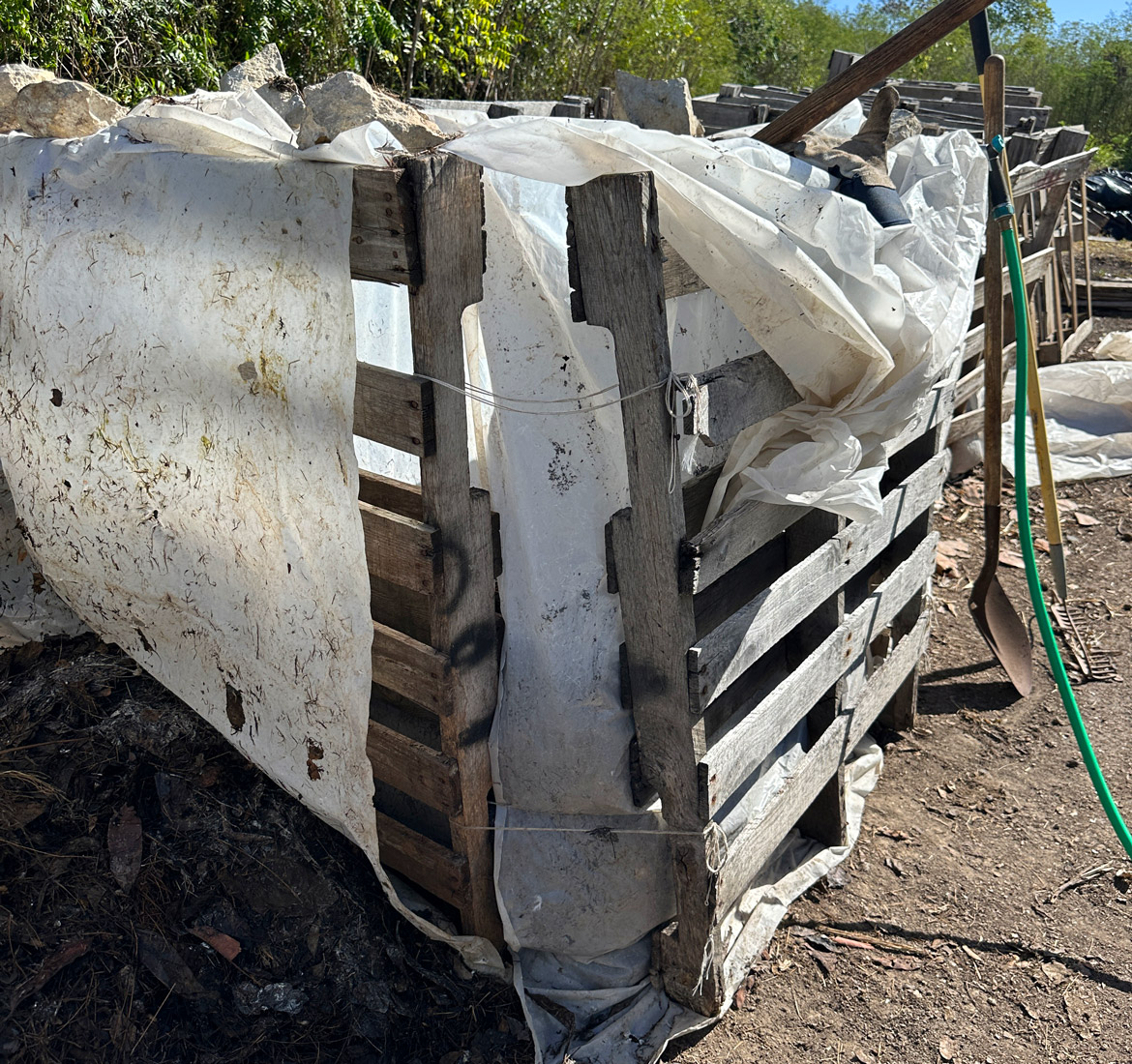
Quite often, when we combine the two bays into one, the resulting pile might be a little too large for an enclosed bay. To solve that problem, we don’t tie on the front pallet flush with the sides – we leave a little extra room. This batch is no different, though I think we’ll do just fine with space once it’s all combined.
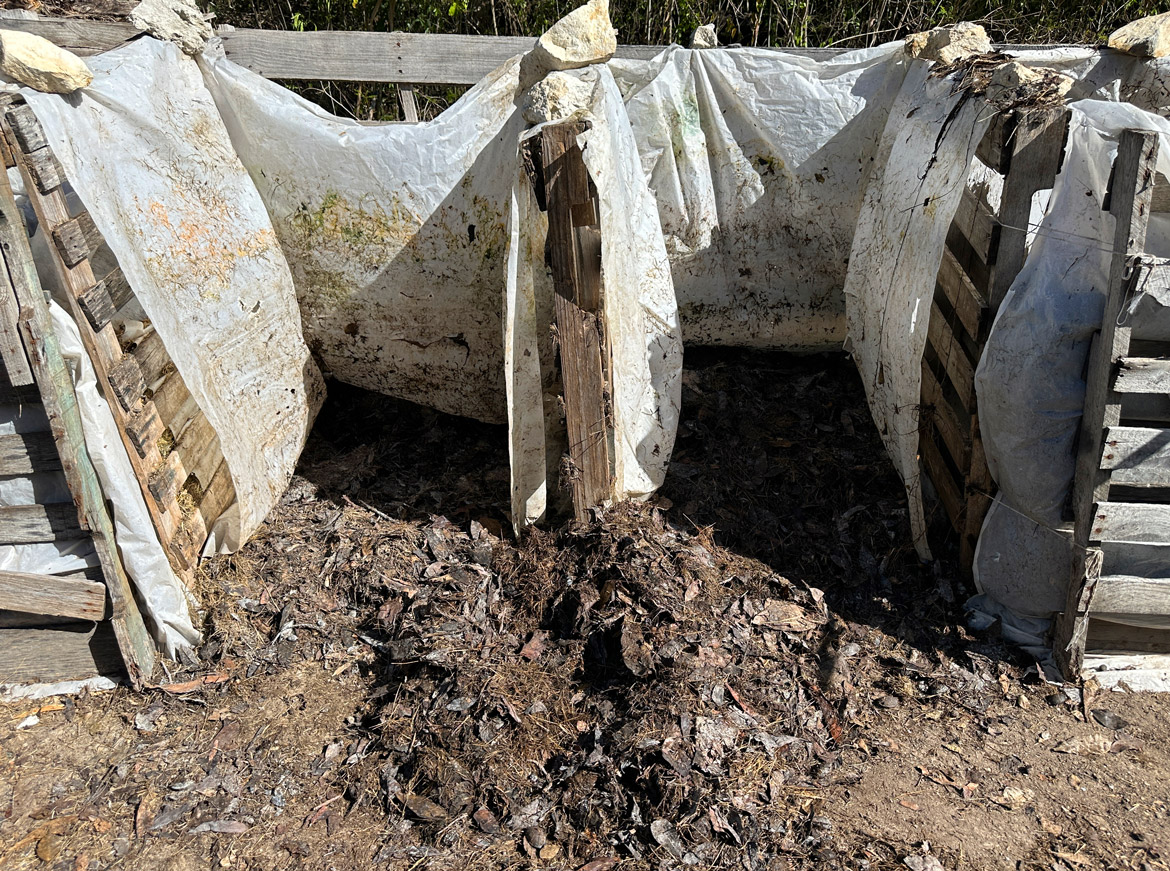
We’re almost at the bottom, and the actinomycetes are still visible. That’s an excellent sign for this batch.
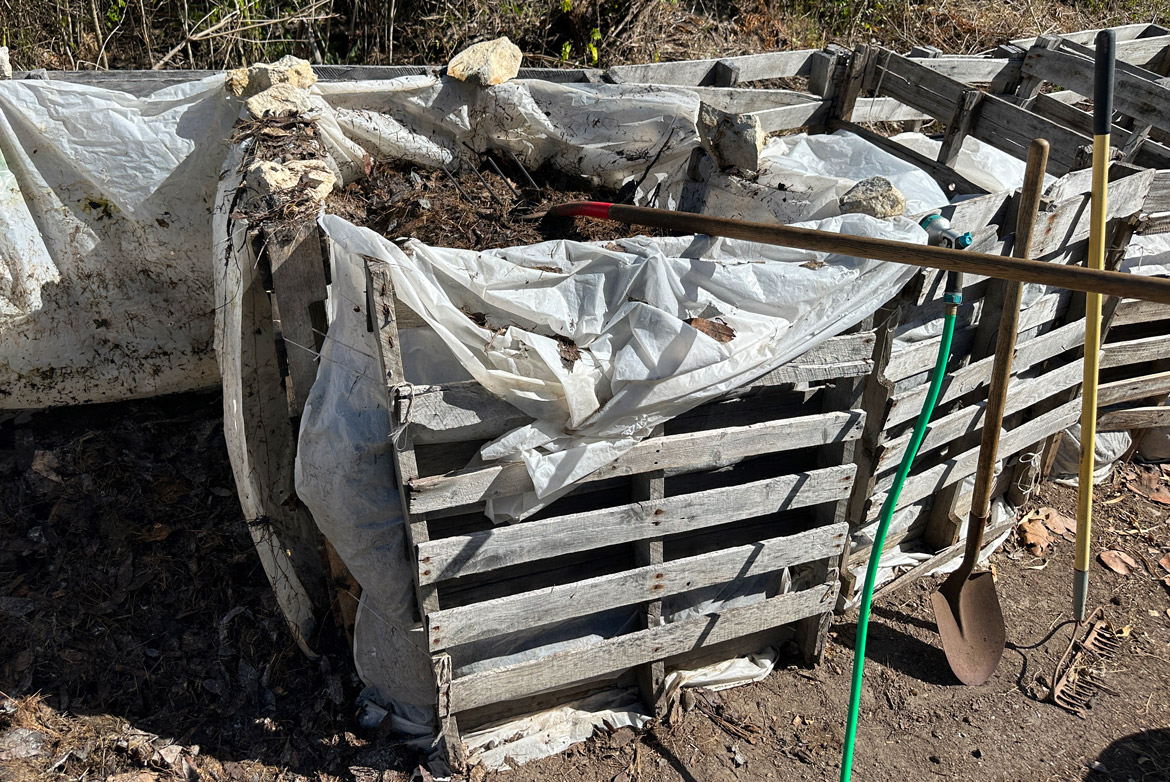
As usual, we compress the material downward a bit, this time using the pitchfork. That helps the tiny microbes access everything they need, and it also helps to remove larger air pockets, so the material won’t dry as quickly.
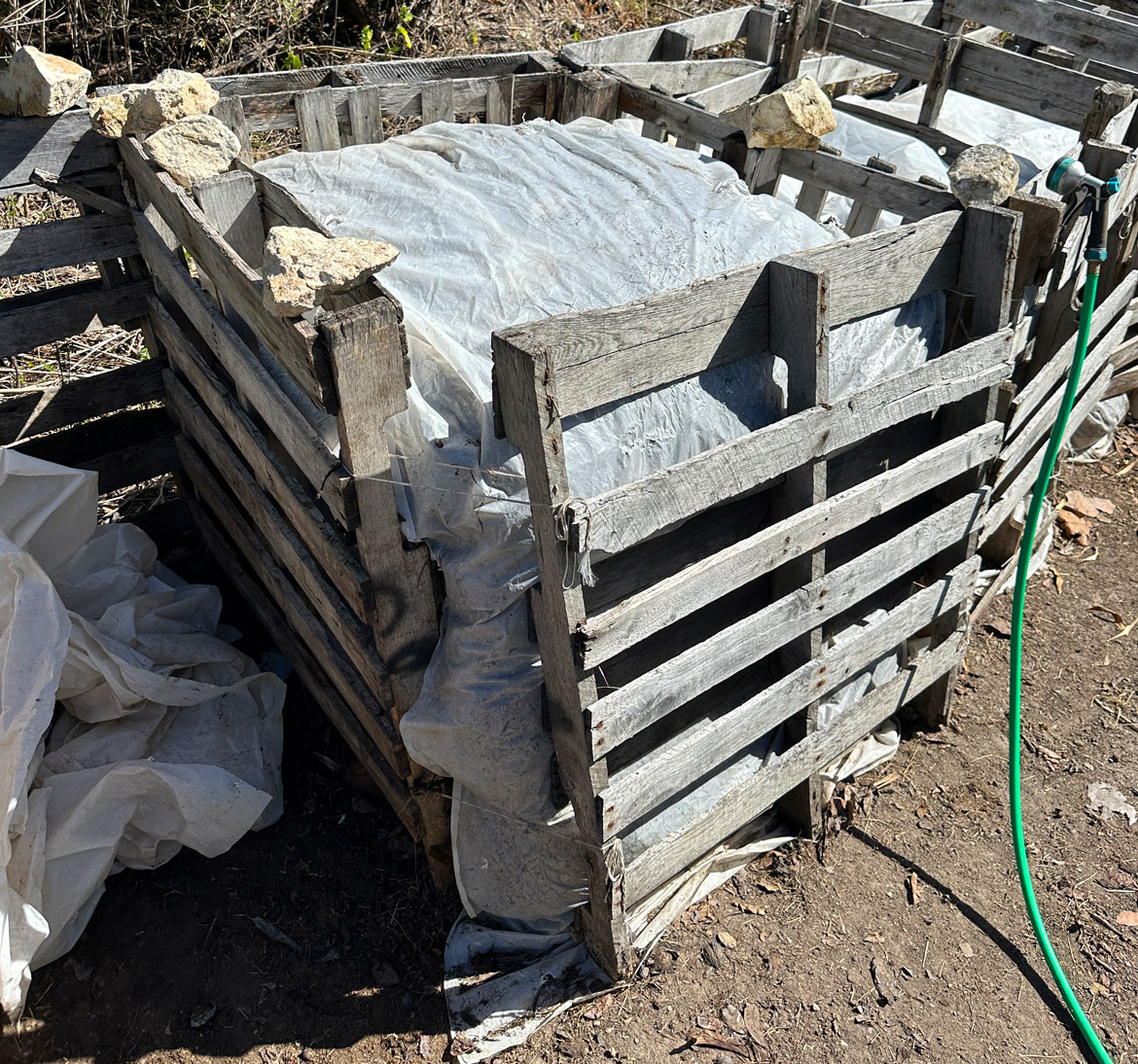
And here’s the end result. Both bays are now combined into one. It’s now more efficient for us, with all the material in one bay, and it’s more efficient for the microbes, as they have a larger core area in which to thrive. Now that the pile is larger, I’d be willing to bet that the temperature will go even higher pretty quickly.
Update: It’s Friday, February 27… four days later and the temperature is up to 157°F (69°C). So things are really starting to heat up. That’s a great sign for this batch.
Next up:
The third turn. This is when we start to get into the longer stretch, where the material steadily transforms from rough raw materials into fluffy brown goodness.