
Hi there! Welcome back. This is the eighth segment in our series on the Life of a Batch. In this segment, we’ll walk through our sixth turn of the batch.
Previously:
We went through turn number five, as we document the transformation or our raw materials into lovely brown compost.
Today is Thursday, April 8… 13 days since we last turned the batch, and 65 days since we started the batch. This interval was a bit longer this time because of the Easter holiday. But, compost is flexible – a couple days in one direction or the other, usually won’t make much of a difference. Nature keeps doing its thing.
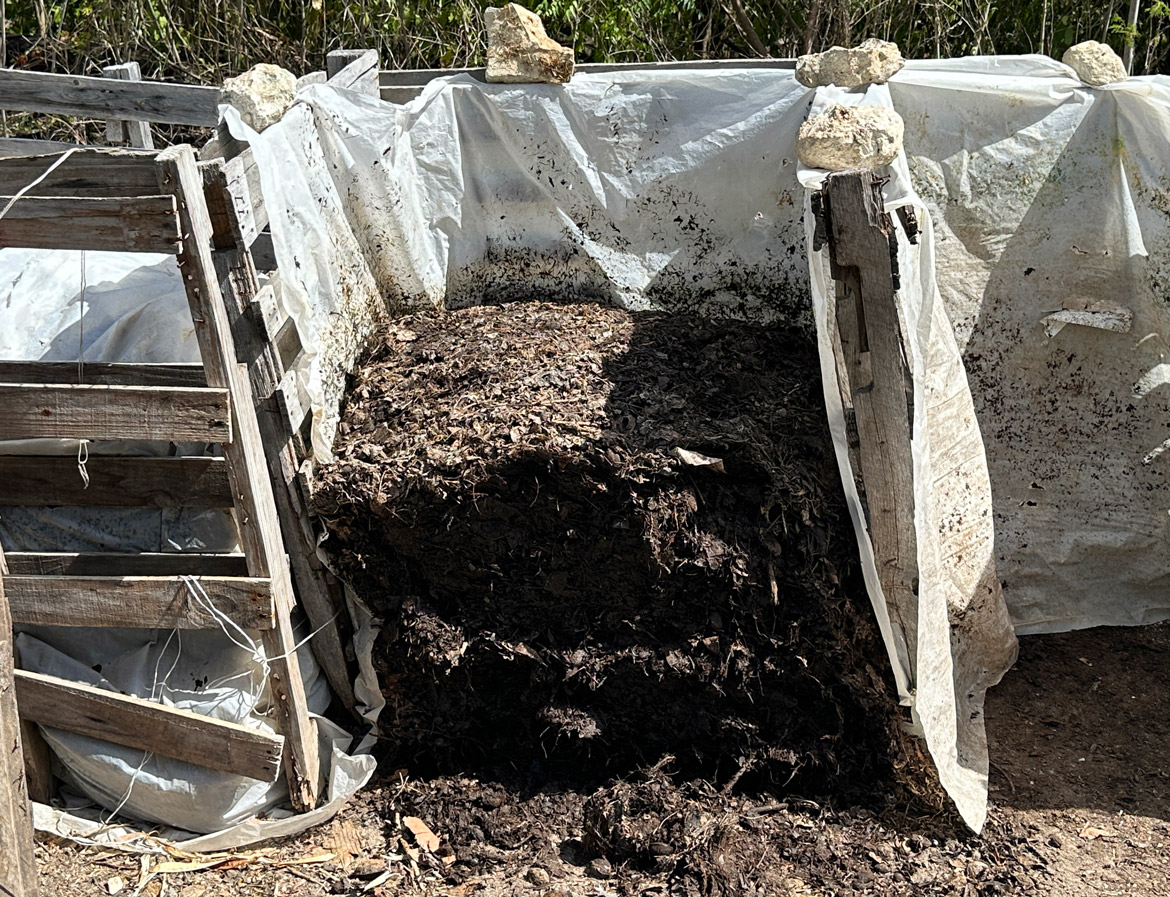
Here’s the current state of the batch. As you can see, We’ve shrunken a bit more, and things are looking a bit more uniform, compared to last time. Bit by bit, day by day, we move slowly toward that beautiful brown compost we know and love.
As for the temperatures this round… the day after the last turn, it dropped to 121°F (49°C), a 21°F (12°C) drop from the day of the turn. Four days later, on March 30, the temperature for this round peaked at 134°F (57°C), then slowly cooled over the last nine days to today’s temperature of 127°F (53°C). Things are cooking along as we would expect.
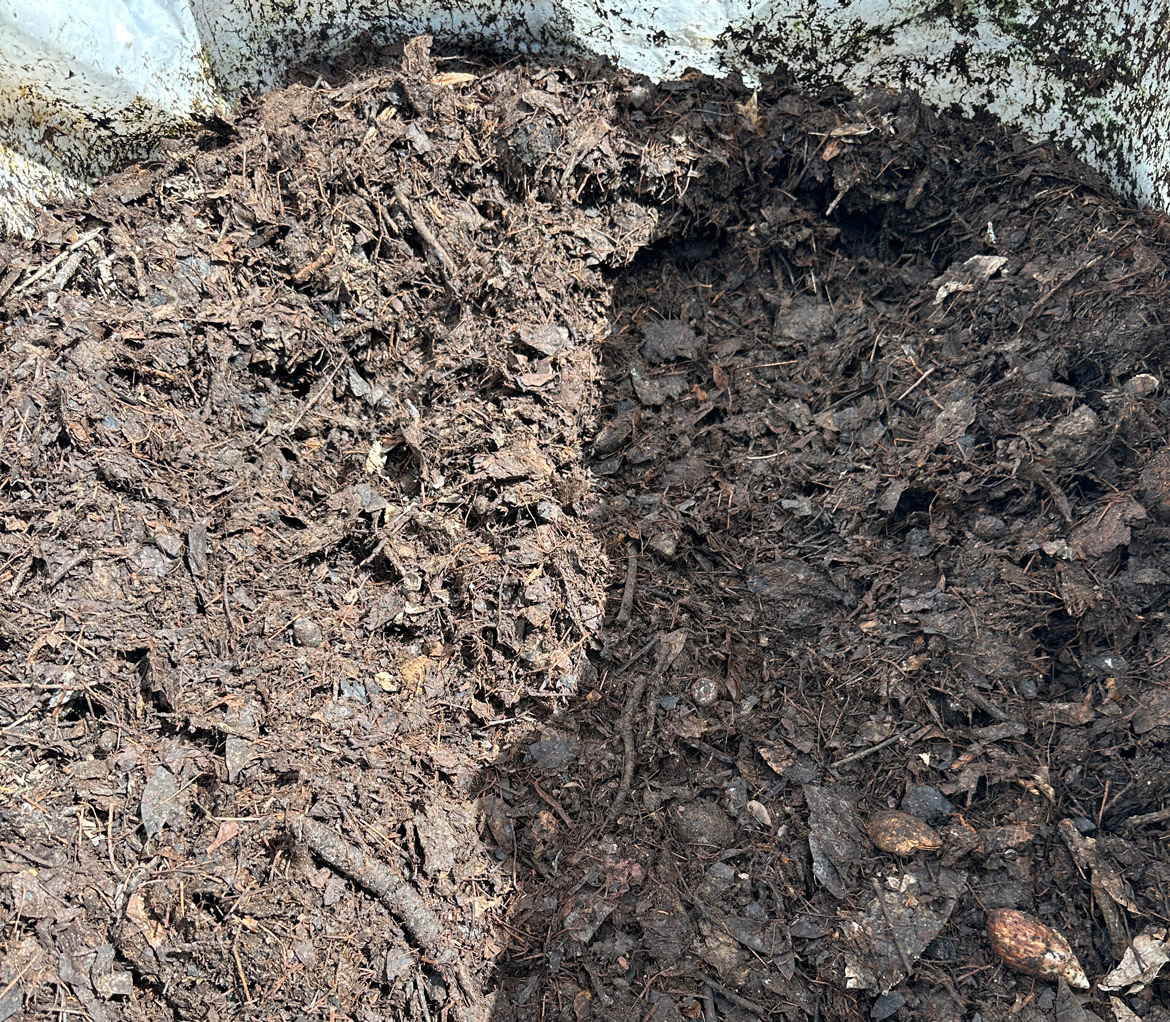
As we dig in, we can still see some actinomycetes, but their job is slowly fading as we move to the cooler, slightly more broken-down state of the material. Things are looking less and less like separate leaves and grass and food, and more like a consistent mix of material.
We’re still considered to be in the thermophilic phase of composting, but things are slowly transitioning to the mesophilic phase, where a different set of microbiology starts to take over. These microorganisms consume and break down the simpler materials left over after the hotter, earlier phase.
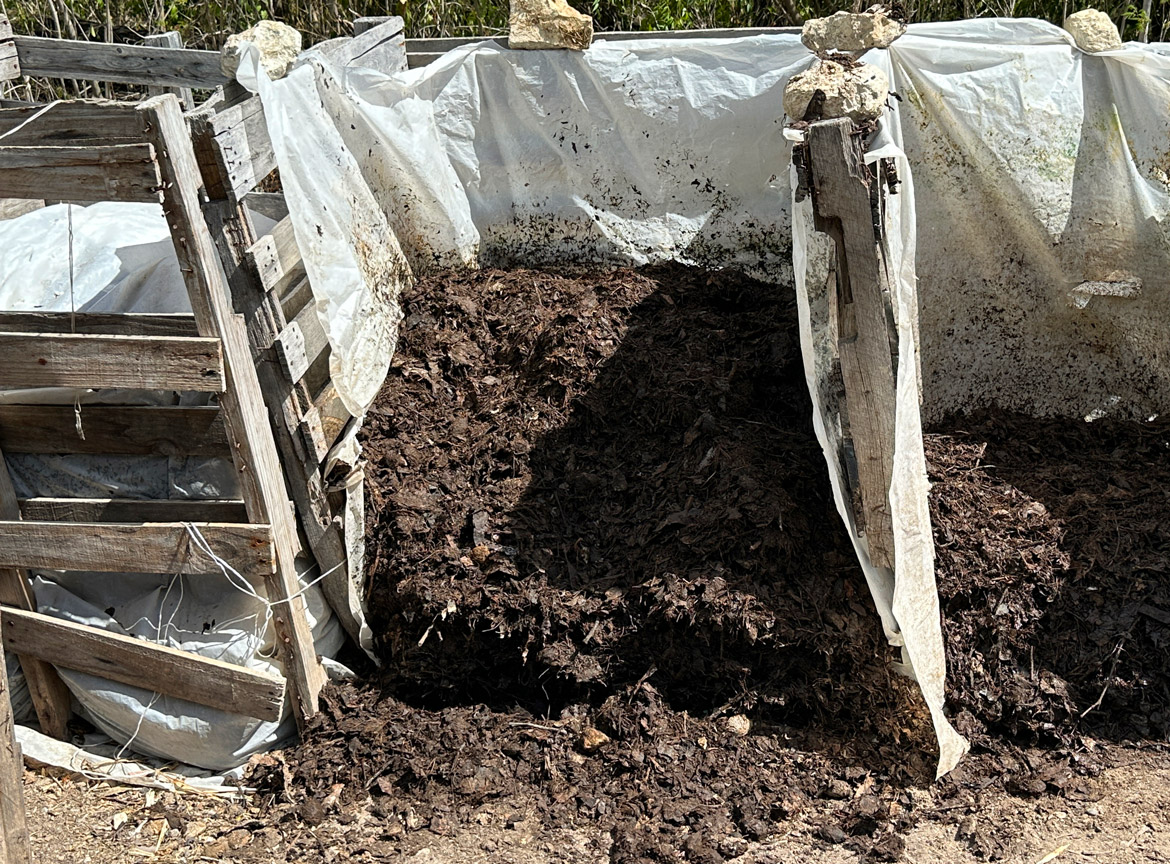
As we do in every turn, we tear the material down through its layers, allowing material from the outside of the pile to spend time on the inside of the pile where more of the microbial activity takes place.
And, we continue to break up and clumps, mix, aerate and moisten the material as we move it to the next bay.
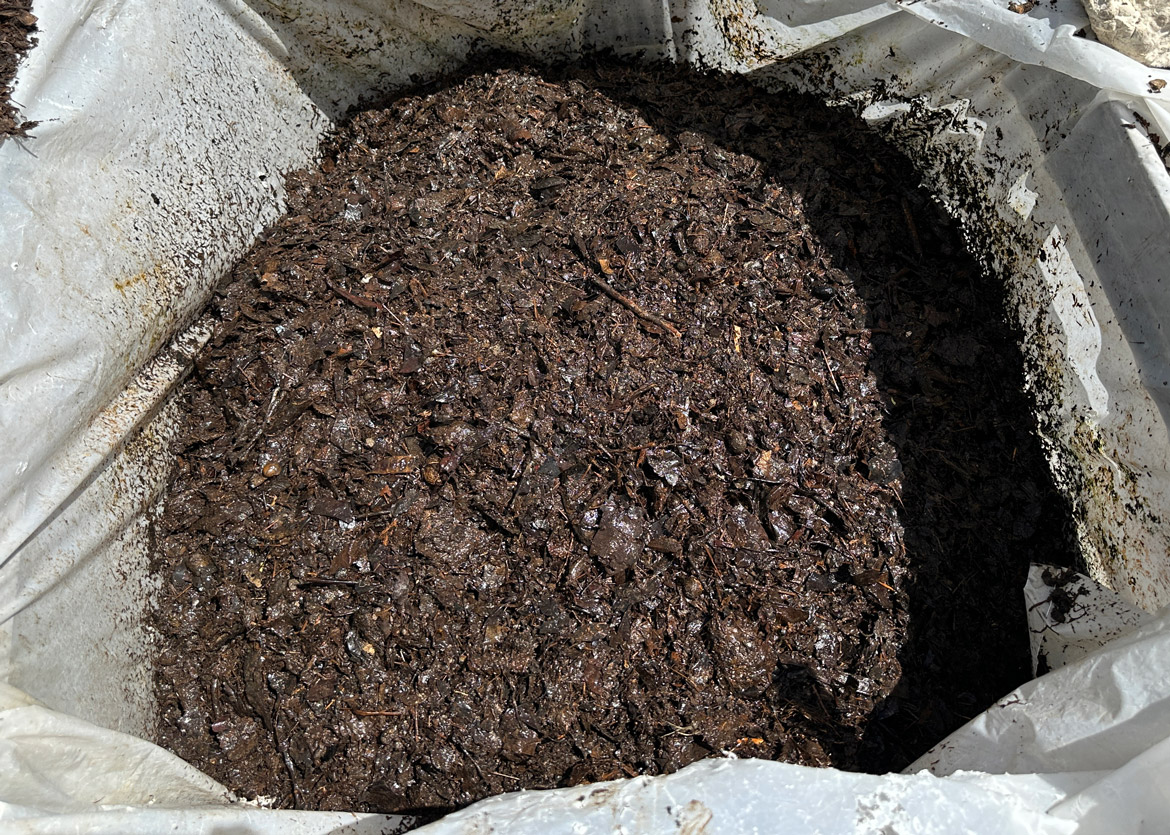
Again, everything is mixed, moistened and moved to its new bay, where it will hang out for the next 10-12 days. We give the top a good soak, then wrap things up for the next interval.
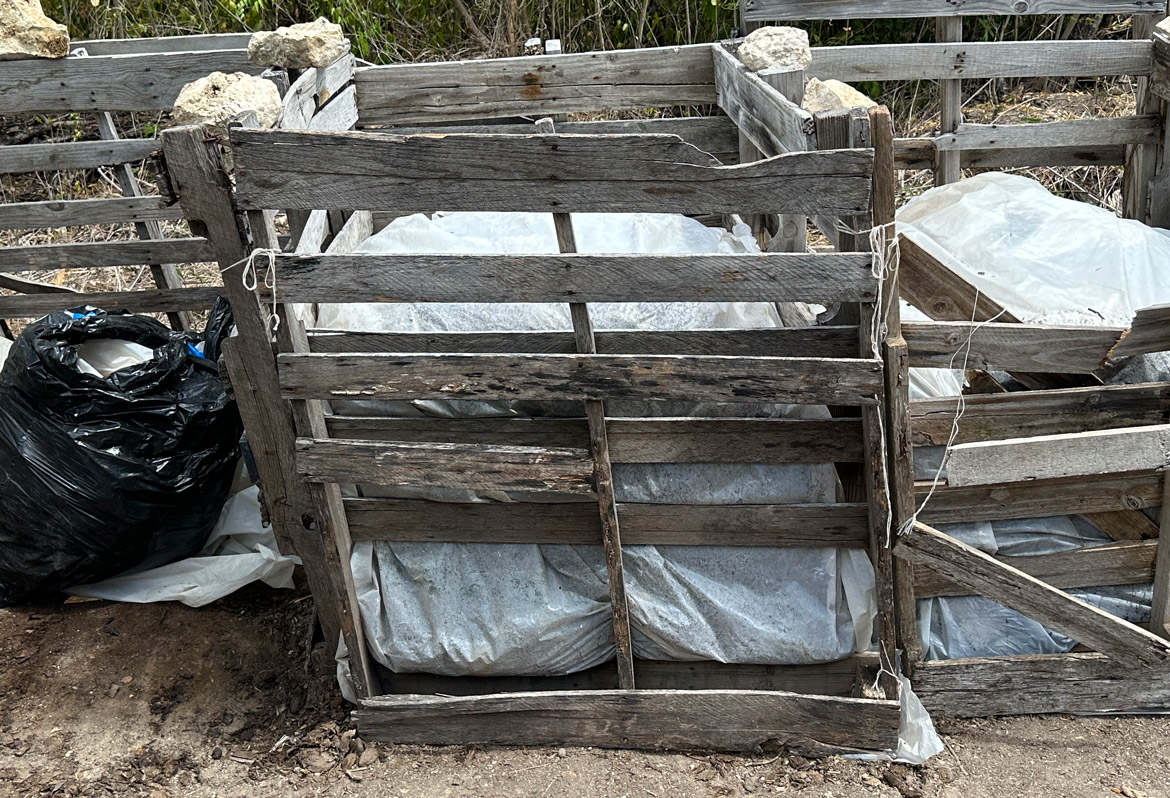
And here we are, all tucked in for the next round.
Next up:
Turn number seven, and the numbers. We’ve progressed far enough through the process to take a look at the patterns that are emerging.