It’s finally begun. The Pepper Project is here.
In truth, it started several months ago, kinda accidentally, but they’re all in the ground now, so we’ll call this the start.
So, what is this pepper project, you ask? At its core… We’re finding out how a pepper crop will do in our farmland soil, which hasn’t been disturbed in years, using only compost and compost-like inputs. No tilling, no chemicals, just biology. Seemed like an interesting question to us, especially as we’re not expert pepper people, or even expert gardeners for that matter.
Which brings us to our very important disclaimer, before we get too far into it. This series is in no way intended to be a class on growing peppers (for that, we strongly recommend Pepper Guru and Pepper Geek on YouTube). It’s not a class on growing anything, really. It’s just an experiment. A compost and biology experiment, specifically.
Since we’re compost people, we thought, let’s see what this stuff can actually do. And since we had sudden, accidental access to a lot of pepper seedlings, we figured, why not?
The theory behind this project is fairly simple: healthy microbial life improves soil structure, moisture retention, nutrient availability, and root health. Rather than feeding the plant directly with synthetic fertilizers, we’re trying to feed the biology in the soil and let that biology feed the plant.
To understand our approach to this experiment, we’ll break it into 4 parts: the plants, the soil, the fertilizer, and then, how we setup each pepper plant when we planted them out.
The Plants
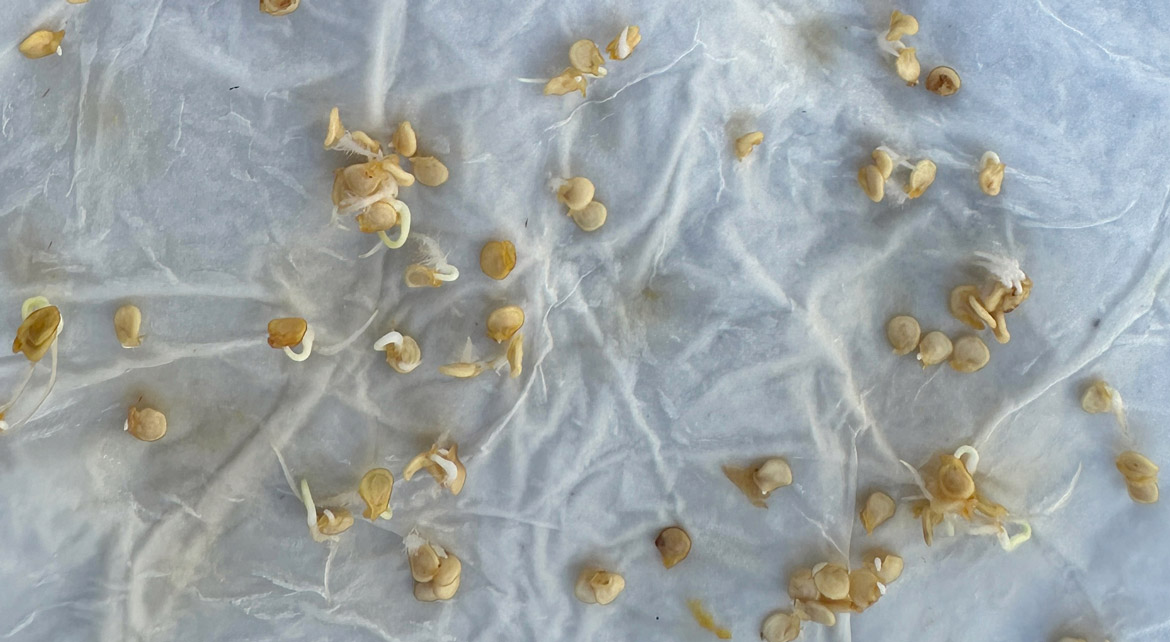
This is how it started… with seeds, of course. We have 4 mature Scotch Bonnet plants in our home yard which are producing pretty well. And we decided to grow some more, as we have extra space in the yard to fill.
On February 15, we took the seeds out of a couple peppers (that pic only shows a few of them), set them up using the good old paper towel method, and waited for them to germinate. A few days later, wow did they germinate. Suddenly we had dozens of these little guys rapidly expanding, and we thought, “hmm, this seems like an opportunity to try something… bigger.” And, well, the idea was germinated.
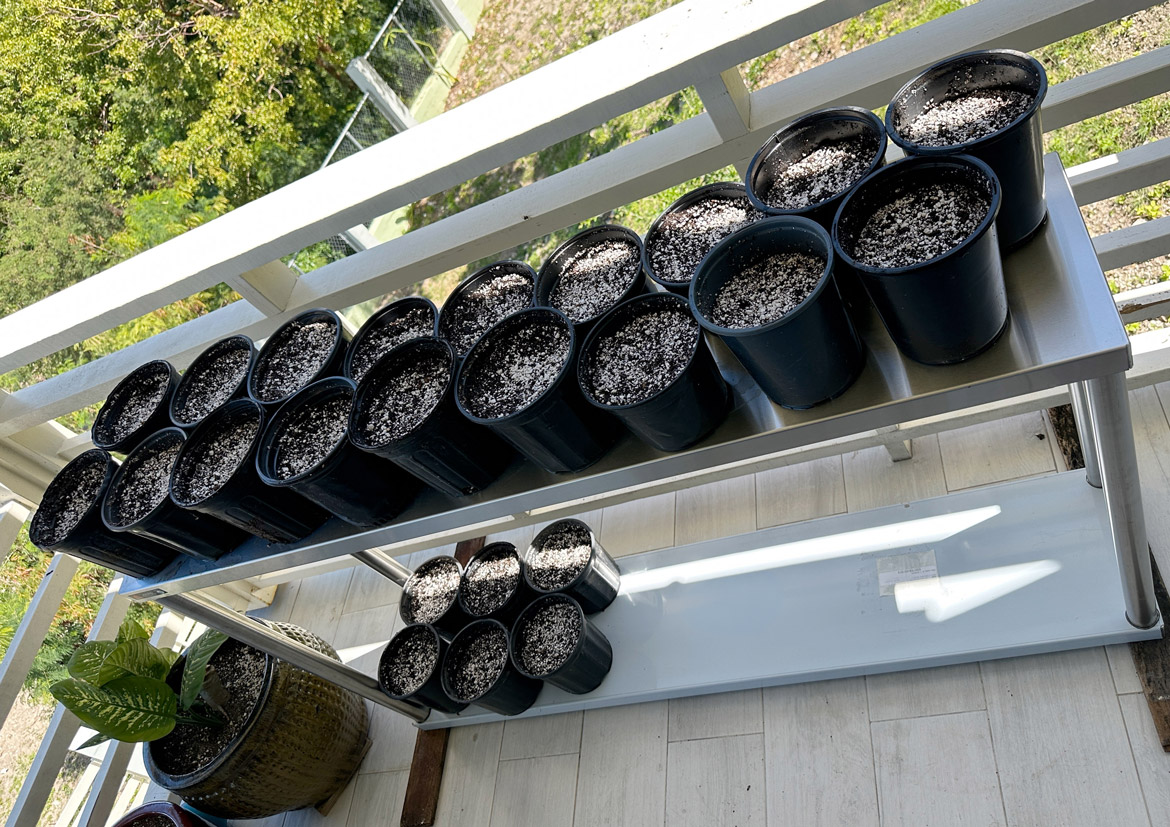
As the seeds kept sprouting, we set them up in these starter pots. Over the next couple of days, we potted up 32 of them. We probably would have done more, but we were running out of pots.
The mix we used to plant them in was composed of used potting soil, refurbished with some of our compost and some perlite for drainage. Then we put them on these shelves on the East-facing end of our gallery so they could soak up the morning sun, and we waited for them to grow. And grow they did.
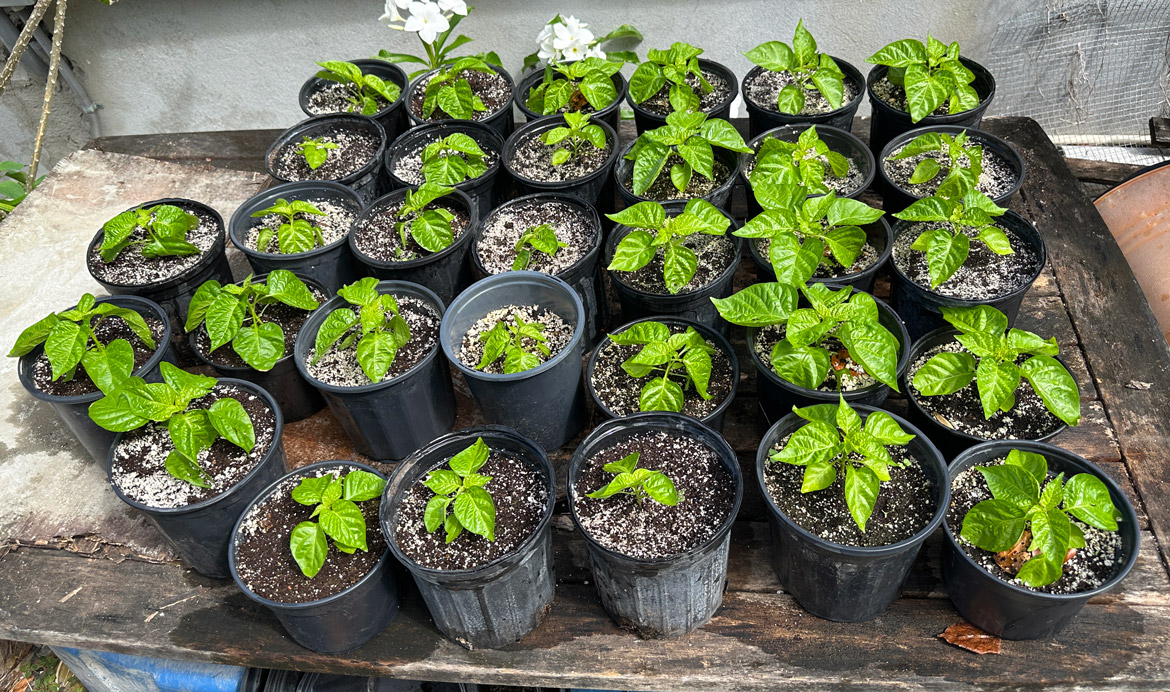
This is our motley crew on April 5, when we moved them outside to this table on the South-facing side of the house. It was full-sun time, and these youngsters seemed ready.
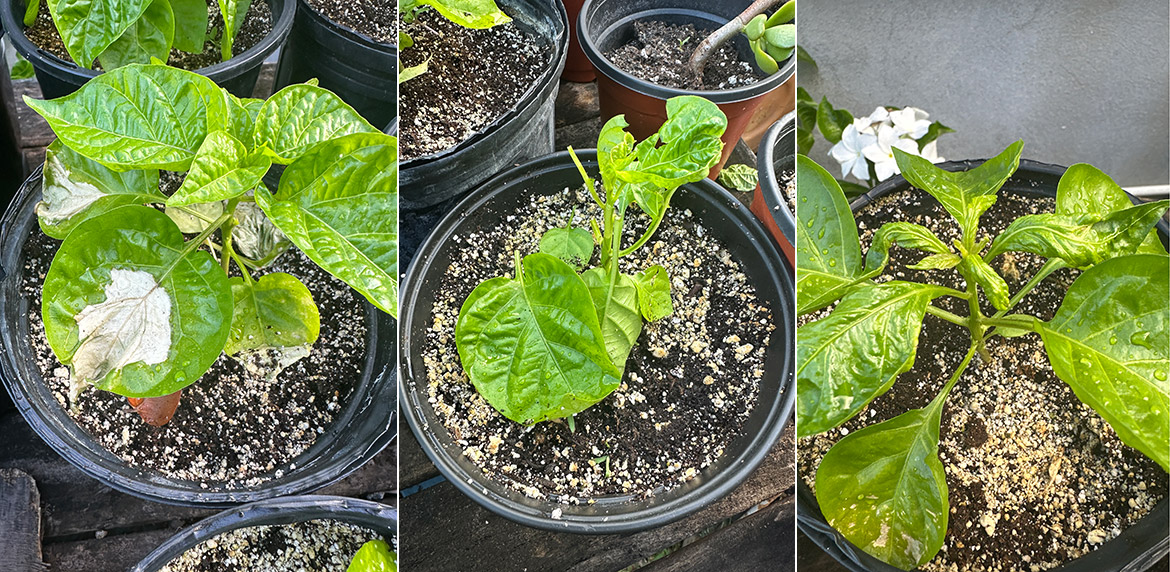
We had a few issues early on. A few of them got some sun-scalded leaves from the move outside. We also had one get chopped up a bit – we suspect it was a grasshopper. And another one had these weird crinkly leaves at the top, most likely from some pest pressure, but we’re not sure.
We kept all the plants, though. As this was an experiment in compost, we were more interested in real-world results, not perfect pepper production.
Eventually, the sun-scalded plants dropped the burnt leaves and grew new ones. The grasshopper victim rebounded as well. And crinkle-top seemed to grow out of it just fine. Ultimately, despite some minor setbacks, they all continued to get bigger.
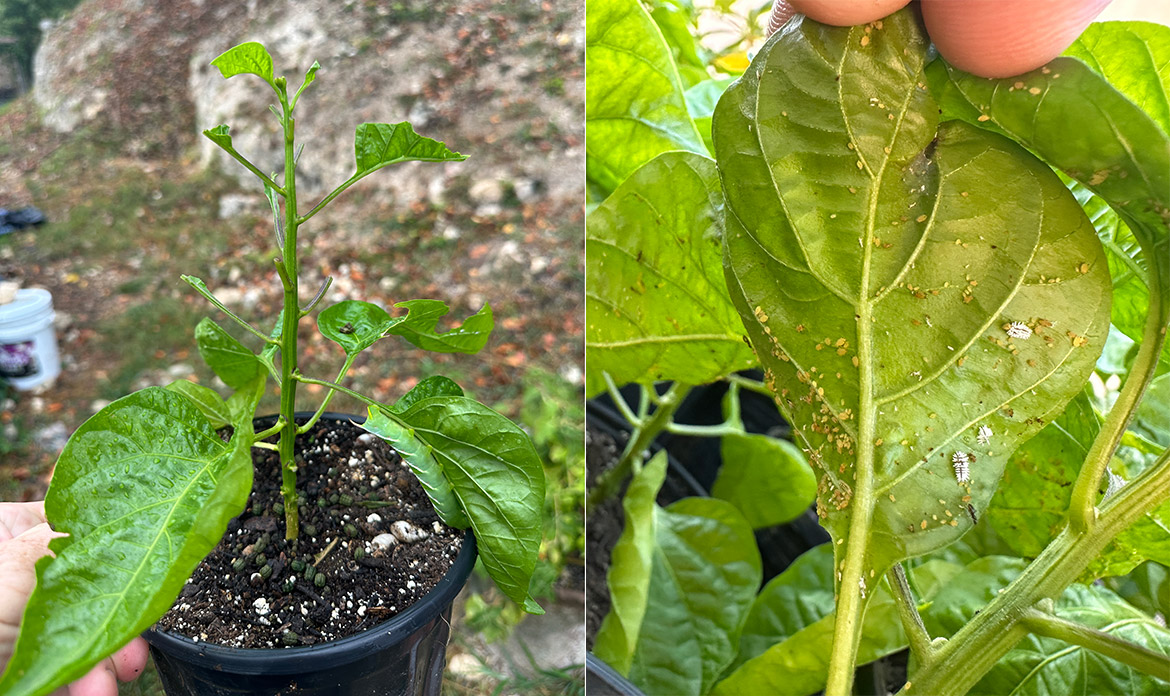
Later on, we had some other issues. On May 5, we woke up to one of the plants having been thoroughly munched overnight. You can see the horned culprit clinging to the leaf in the lower right of that picture. At the same time, a couple other plants developed some pest issues. For those, we wiped most of the little buggers off, then hit the leaves with a mild Neem oil solution, which seemed to take care of it.
All 32 plants kept going, until Monday, May 11… planting day.
Before we could plant anything, though, we needed to prepare the soil.
Next up: how we prepped our soil without tilling or chemistry.