Previously: We launched The Pepper Project. If you haven’t read that part yet, you probably should.
The Soil
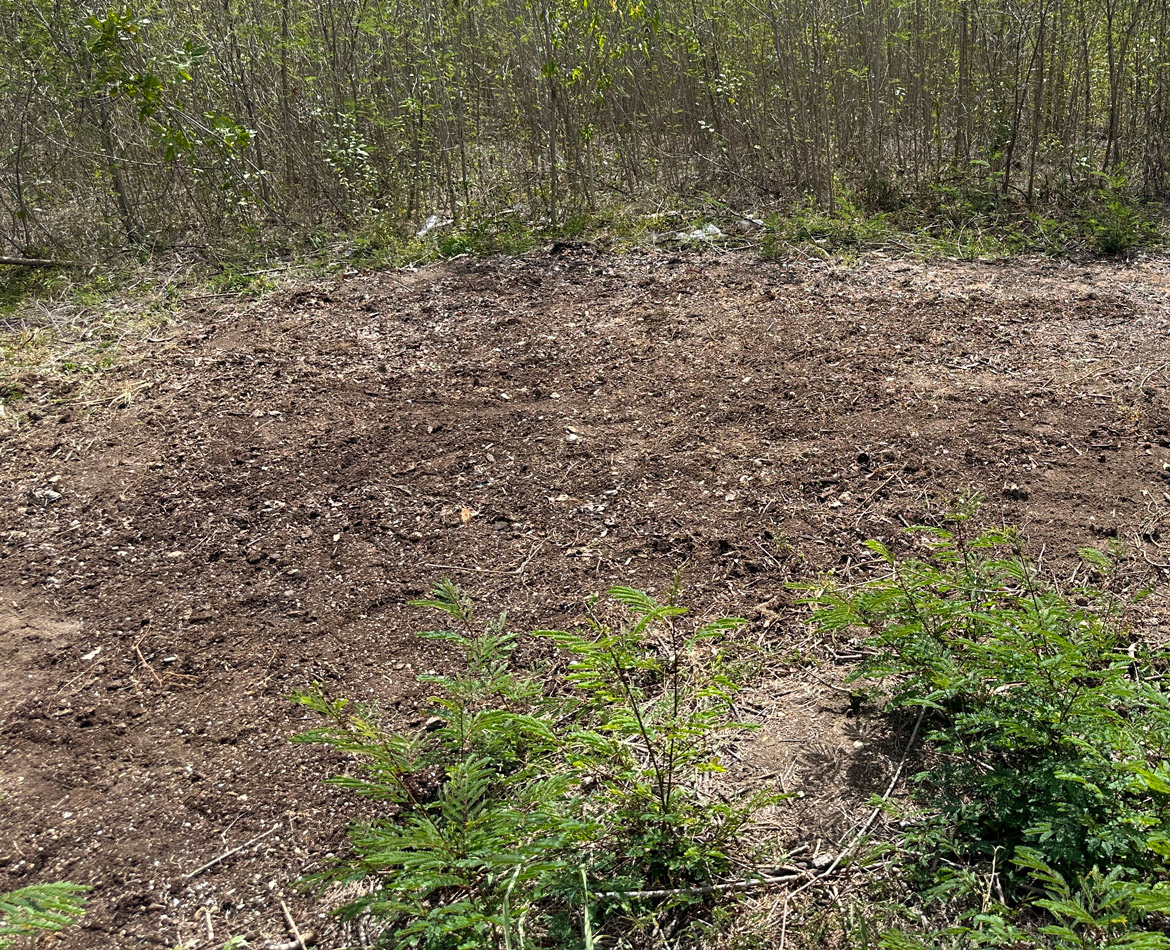
Here’s our plot on April 16, complete with remaining wild tamarind saplings in the lower right. The whole space was actually covered with those saplings, until we attacked it with our pick axe. Anyone who’s ever removed wild tamarind manually knows exactly how much fun we had doing it.
For background… this land was last disturbed in mid-2022, almost 4 years ago, when it was cleared with an excavator. Since then, it’s been home to wild tamarind and other scrub brush, getting chopped back periodically when our yard guy does his thing. We suspect, over that time there’s been some soil compaction. But otherwise, it shouldn’t be in that bad of shape.
We didn’t till it. We didn’t dig into into it to see what we’re working with. We didn’t disturb it much at all, other than to remove those wild tamarind stumps.
Instead, we decided to put our compost idea to the test and use soil biology to get things going.
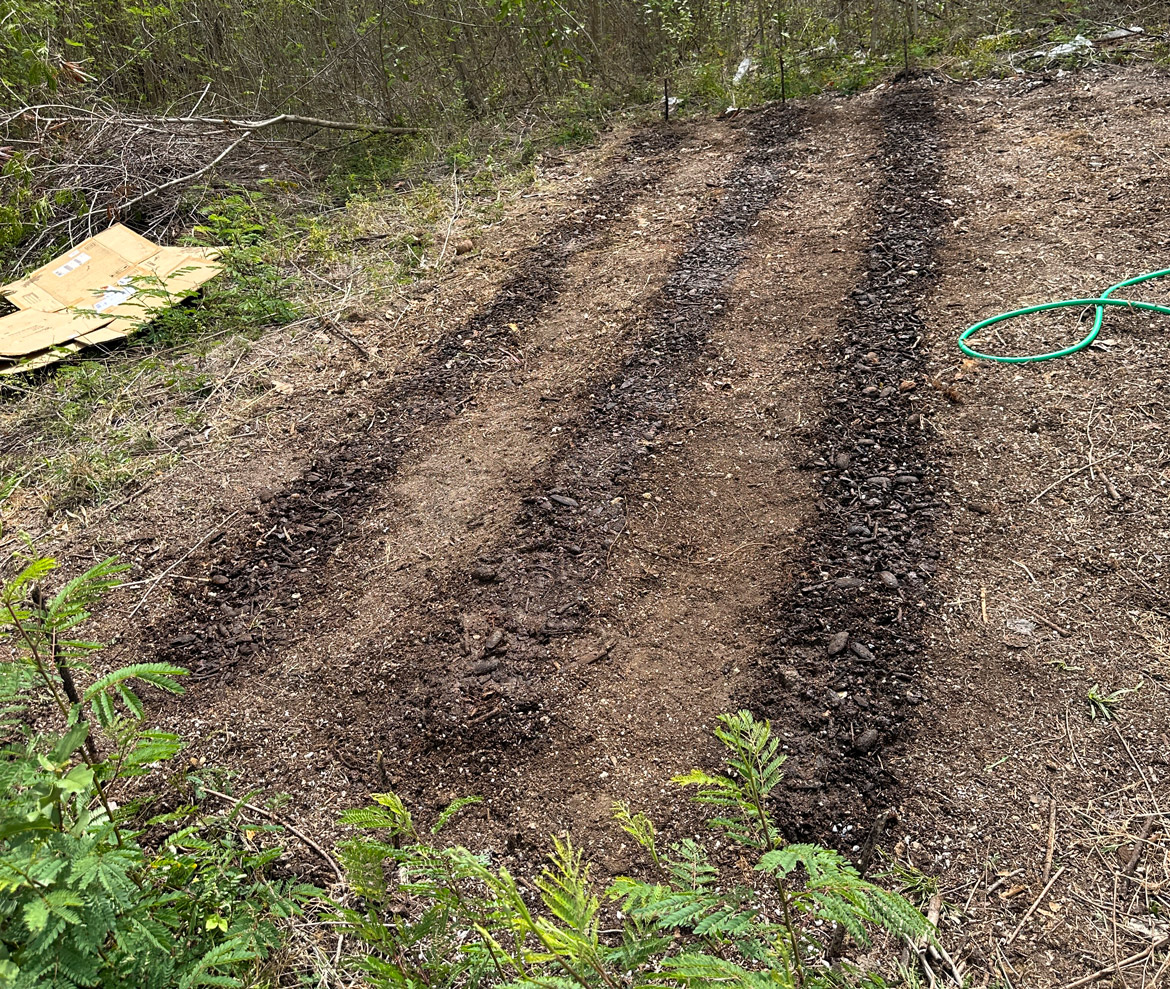
First, we laid down a thin layer of compost overs along where we wanted the rows to be, and watered it in thoroughly. Compost overs are the thick chunky bits we screen out of the finished compost before we bag it and sell it. The overs can contain all kinds of stuff – partially-decomposed pieces of wood, leaves and food scraps, shells, stones, etc. But, it’s all coated with composted material and microbiology. The idea is, we soak that material and microbiology into the soil, and it will start to condition the soil before planting.
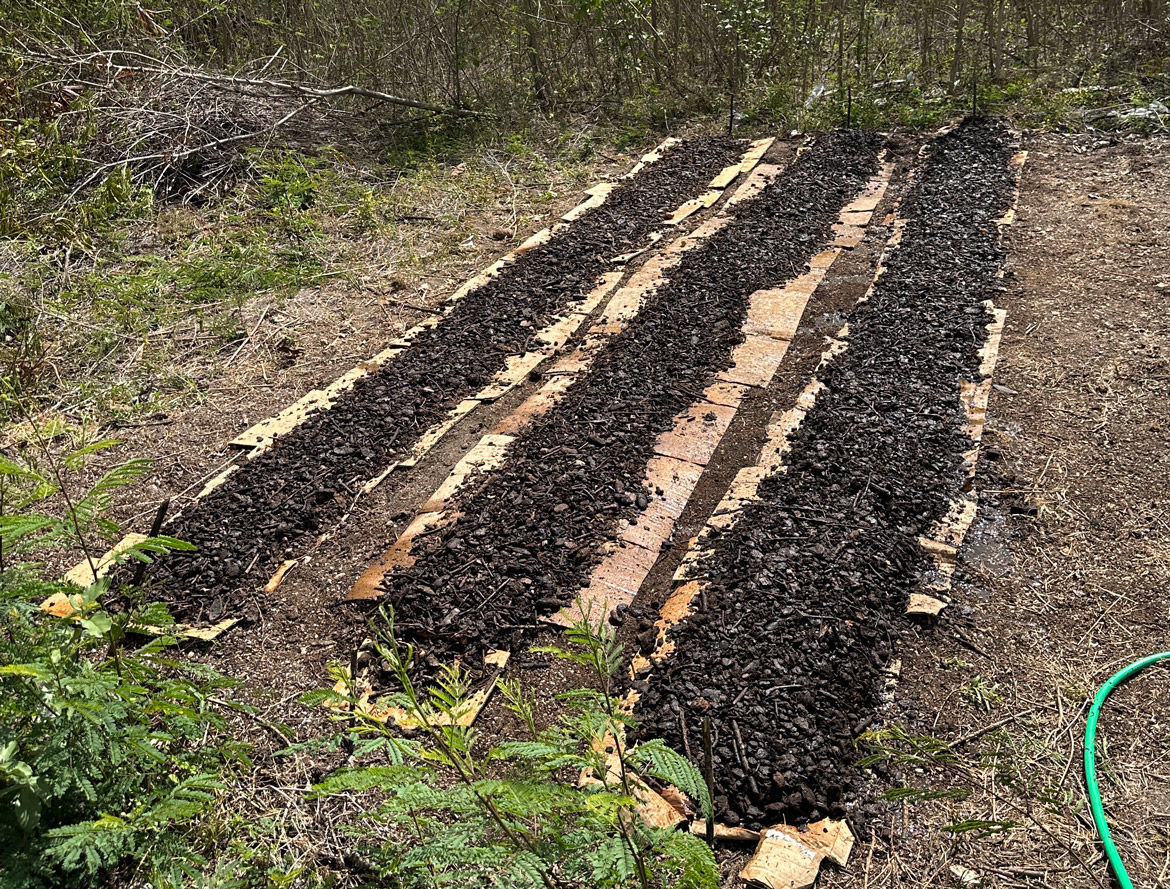
Then we put down a layer of cardboard for weed suppression and moisture retention. Here in Antigua, heat and moisture management are everything.
And finally, a thicker layer of compost overs to work as a mulch and a further microbiological inoculant for each row, then we watered it all in deeply.
This was April 17. The goal was to get the soil started, biologically, before we dropped the pepper plants in. We figured we’d monitor the soil moisture and add as needed, until planting day. But something interesting happened.
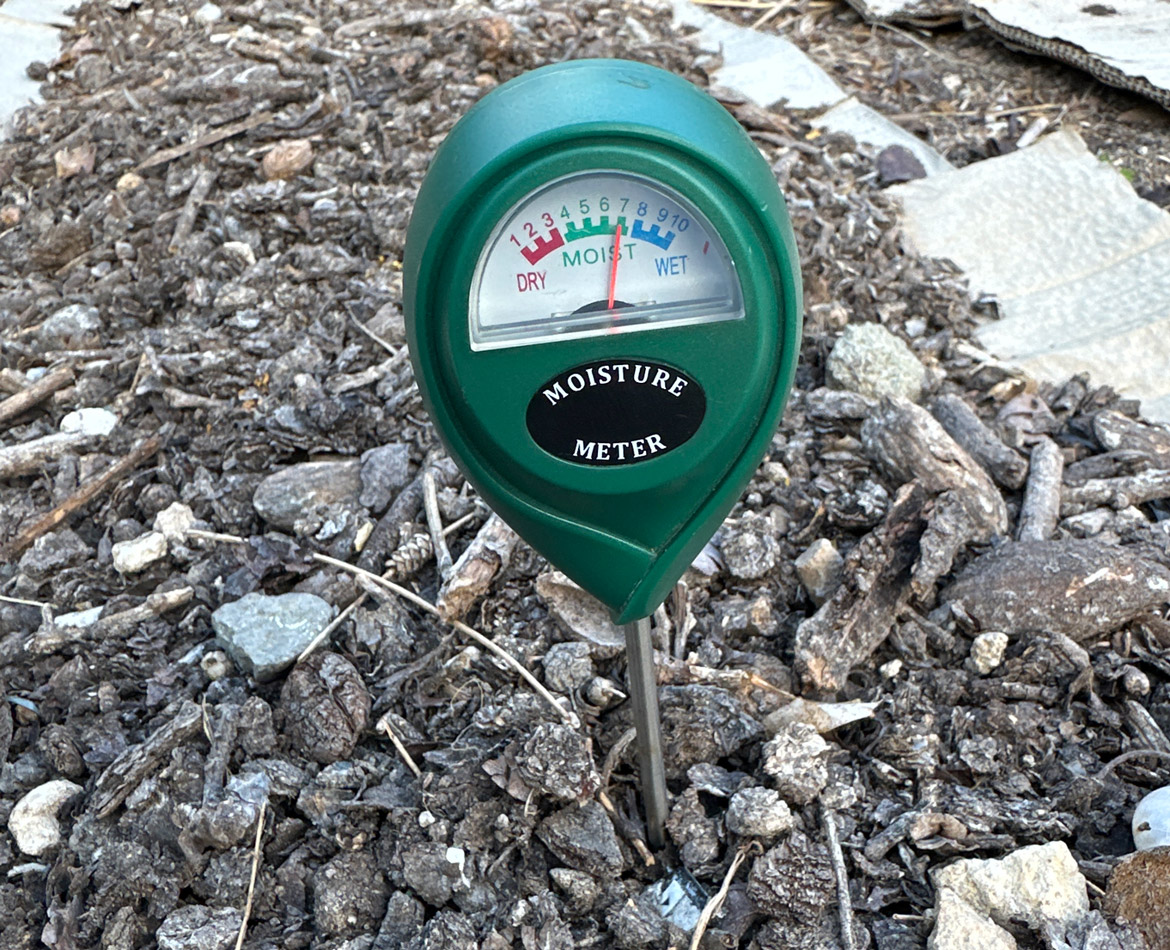
This is the moisture meter reading on planting day, May 11. 24 days later and we hadn’t added a drop more of water since we setup the soil. Clearly our cardboard/overs method held the moisture in the soil. This was a pretty good sign.
So, our soil was coming along nicely. Now we needed something to feed the peppers.
Next up: Brewing some compost fertilizer.