It’s now Tuesday, May 19, one week into The Pepper Project, and we’ve definitely learned a few things.
Previously: The First Watering. Or, start from the beginning of The Pepper Project.
First, as we established in the last post three days ago, our weak link seems to be the original root balls from when they were in pots.
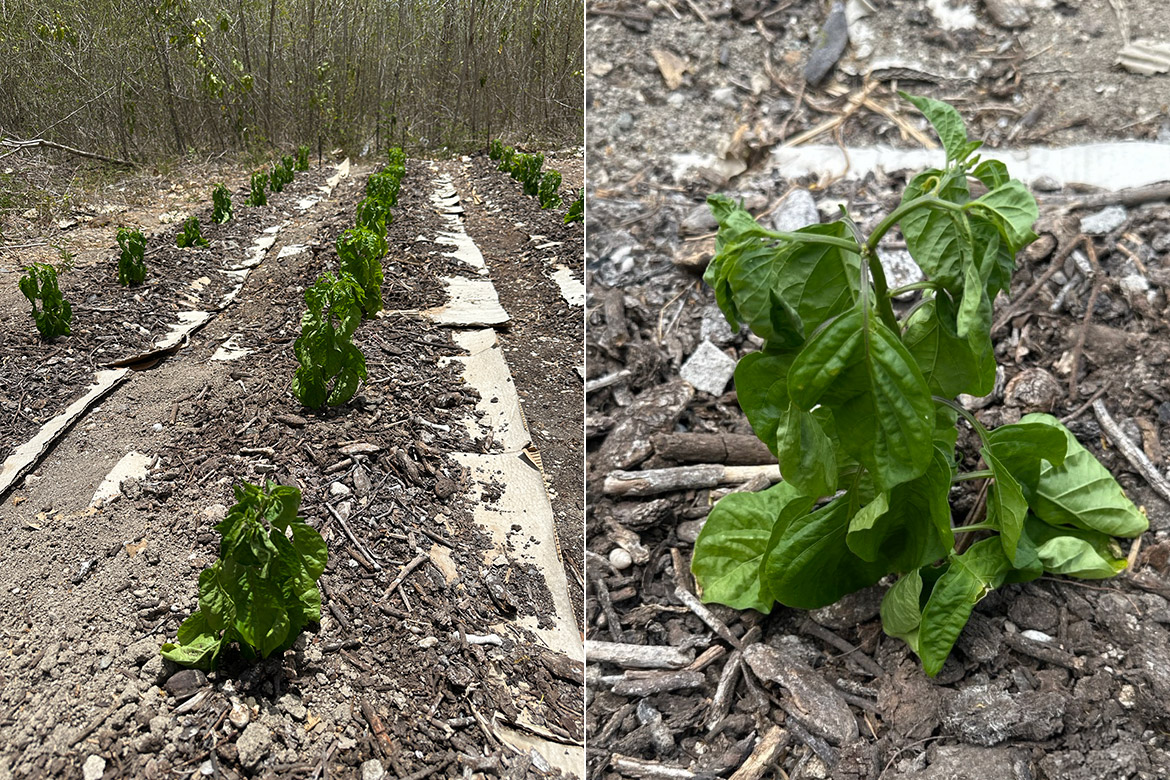
Monday, May 18 was similar to the first watering day two days earlier… they looked good when we first arrived in the morning, but after 11am when the sun got higher, their little root ball water tanks started running out. You can see the stem droop in the second image. So, we gave them another maintenance watering.
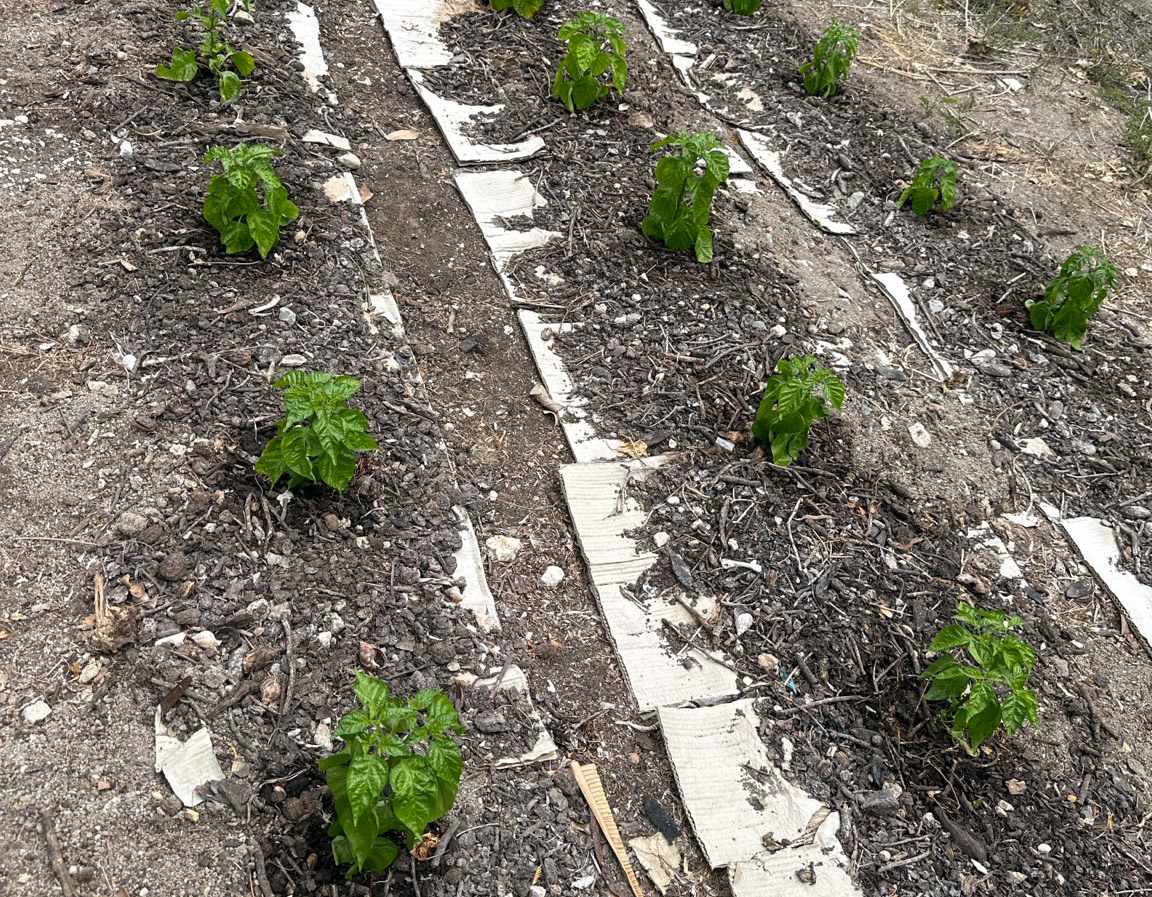
Less than an hour after that maintenance watering, they perked right back up.
Seems like this will be our pattern until the roots can fully bridge the gap between the lighter, quick-drying root ball soil and the surrounding native soil.
Our system seems to be working so far… the areas of the rows between the plantings, still under the cardboard + mulch compost overs, is still moist, even a month after we set them up. Once the plants can sufficiently expand outside their root balls enough to take advantage of it, those areas should act like moisture batteries, extending the time needed between watering.
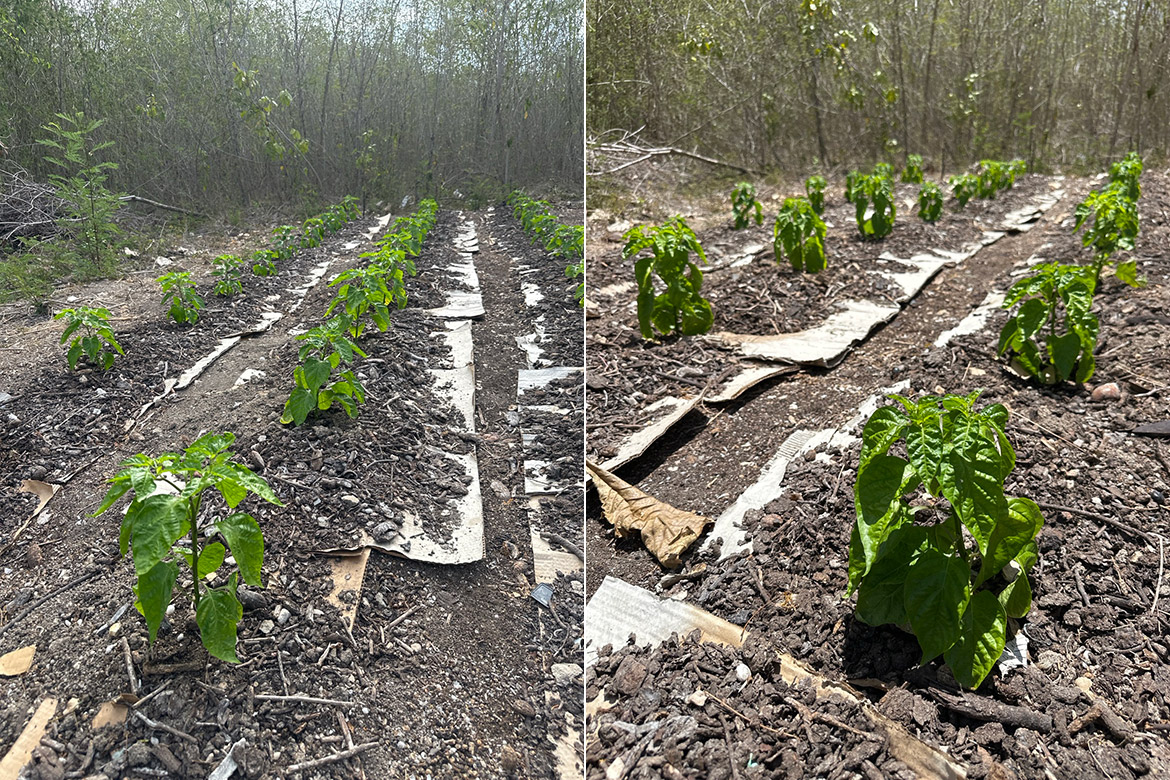
This morning (May 19) at about 8am, our little guys were looking strong. Even after 11am, they were still holding up well… good moisture in the leaves, no stem droop. Seems like our schedule will be, maintenance water every 2-3 days for the next week or two, until these guys can successfully branch out into the surrounding soil.
Funny enough, we probably couldn’t have picked a more brutal time to start this experiment. We’ve had beating down sun and basically no rain over the last week, and the weather forecast is about the same for the next week.
It’s definitely been an acid test for these little guys in our system, under these conditions.
However, from an experimental standpoint… this may turn out to be the perfect time to have started it.
These are not pampered greenhouse peppers easing into perfect loam under shade cloth and drip irrigation. These little maniacs are growing in a system built mostly from compost biology, cardboard, mulch, and observation.
We said, “Welcome to Antigua. Survive.”
And so far, they’re saying, “We got this.”