Since we wanted to keep it to just compost and compost-related inputs, we decided we’d compost our own liquid fertilizer as well. This is nothing new to us. We’ve been making our own liquid fertilizer for years at home. So, this experiment would be no exception.
Previously: How we got our soil ready. Or, start from the beginning of The Pepper Project.
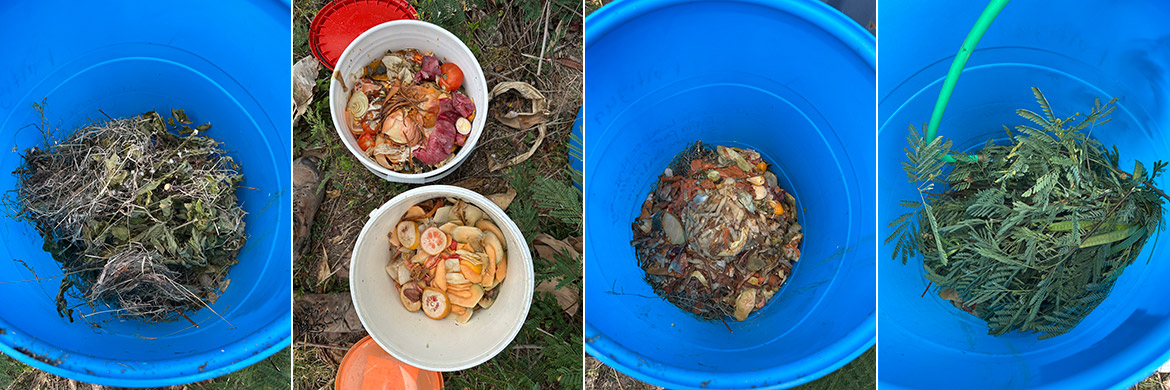
On May 4, we filled one of those big blue barrels, starting with a few bags of green waste. We then added a couple buckets of food scraps, then a bunch of clippings from those annoying wild tamarind saplings. We then filled the barrel with water. Over the next couple days, we added several hands of overripe blackened bananas, as well as a bag of fresh grass clippings. Then we sealed it up and let it cook.
What we’re creating is effectively a bubbling cauldron of future plant rocket fuel… a microbial banquet in a blue barrel. In our heat here, the microbial life will multiply rapidly and break everything down into liquid gold for plants.
Each day, we open the barrel and stir up our witches brew, releasing all the air bubbles and making sure everything stays submerged. In time, this will become the perfect food for our little pepper army.
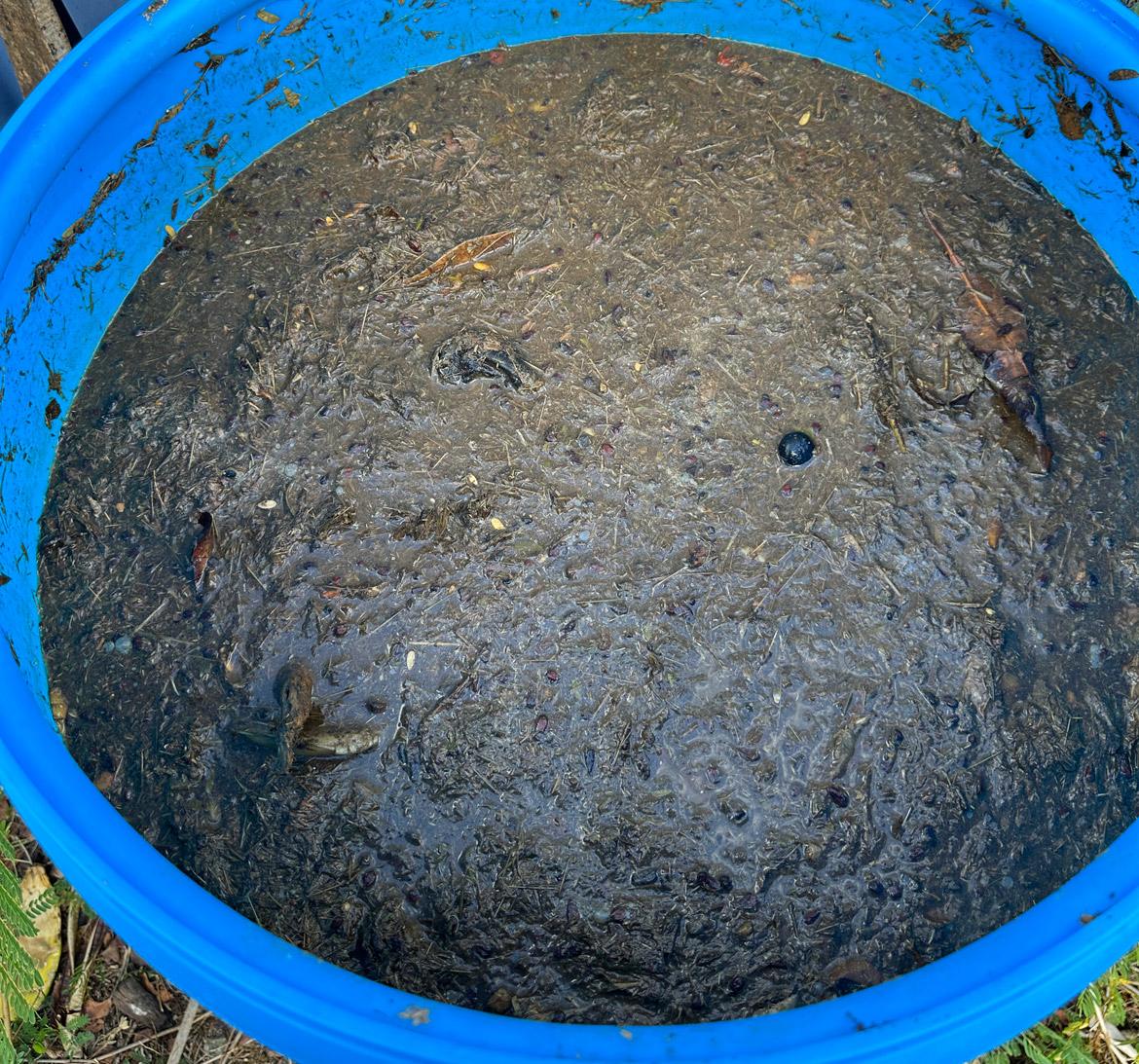
And here’s what our barrel of primordial sludge looks like just one week later on May 11, planting day. Yes, it looks pretty nasty, but we promise, the plants will love it in a few weeks when it’s time for the first feeding.
To use this stuff, we’ll dilute it down somewhere around 10 or 15:1 and give each pepper plant a good drink. Loaded with broken down nutrients and microbiology, this soup will definitely make our little friends happy, without the use of chemicals.
Now that everything is in place, let’s see how would put these guys in the ground.
Next up: Planting Day