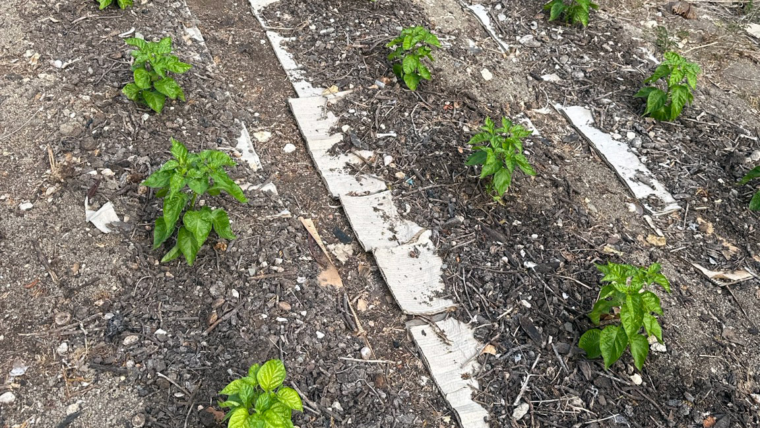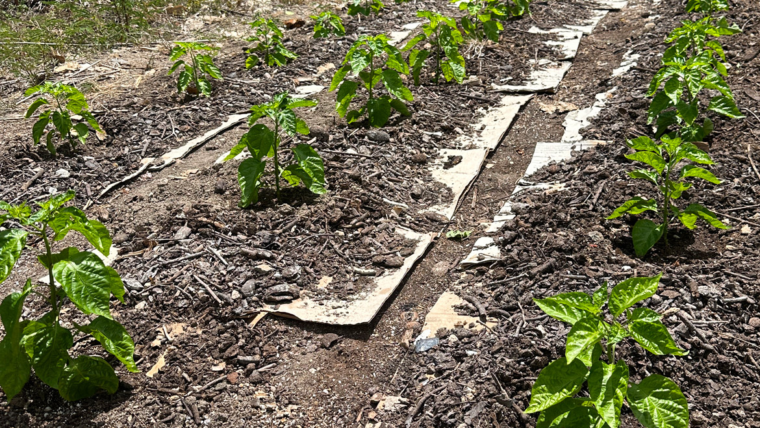
May 11. Pepper planting day.
We decided, in order to minimize transplant shock, we’d do our planting in the late afternoon. That way, our newly transplanted pepper army would have a night to get used to their new home, before getting pummeled by the Antiguan sun.
Previously: How we brewed our fertilizer. Or, start from the beginning of The Pepper Project.
Turns out, we were only able to get half of them in the ground before dark, so the rest had to be seated the next morning. However, this gives us the opportunity to examine what effect, if any, the time of transplanting will have on the transplant shock to our pepper plants. We’ll have to wait and see on that one.
Either way, here’s what we did to prepare the new homes our little pepper friends.
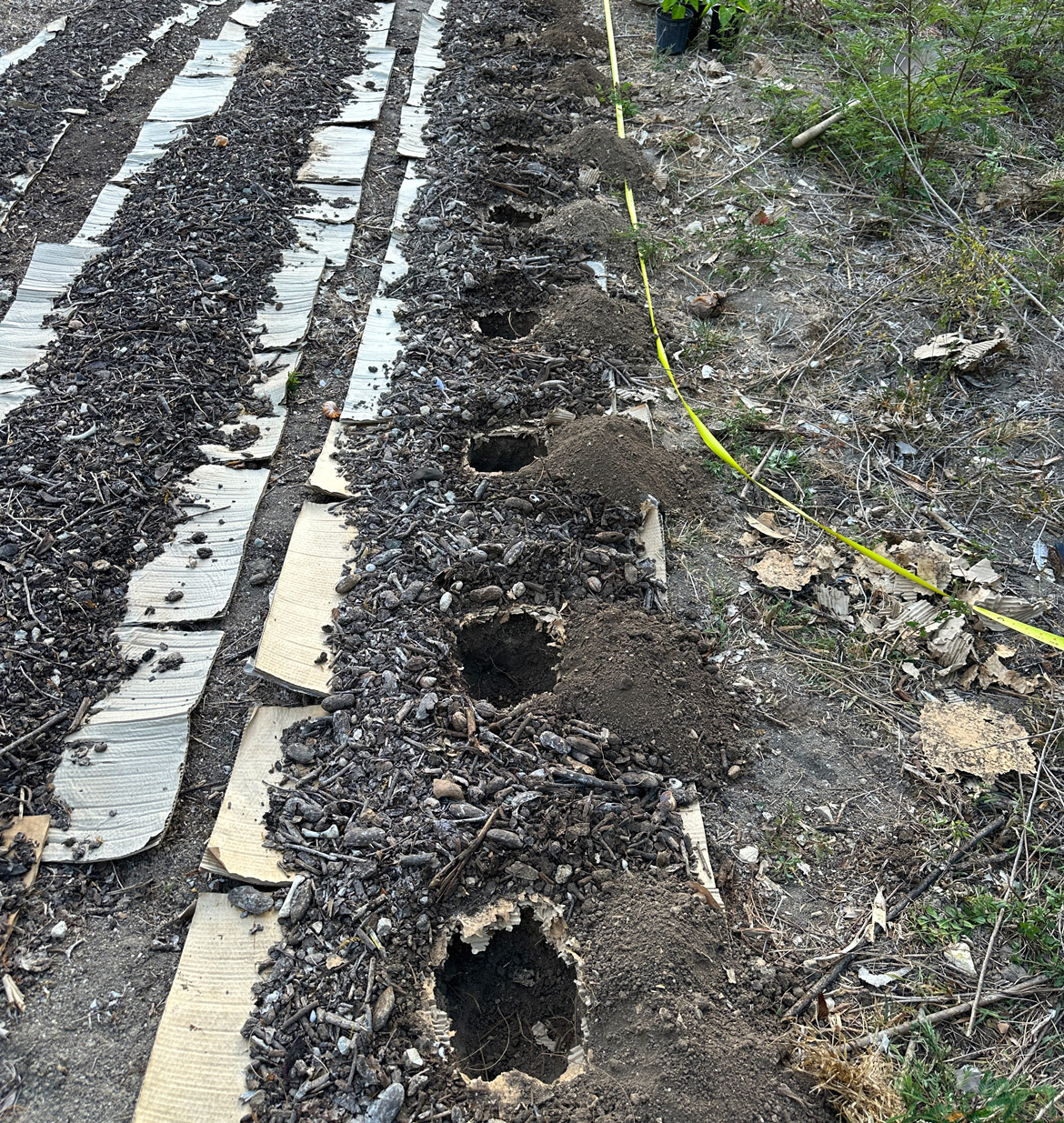
The first thing we did was dig holes for our peppers. We measured out 24-inch spacing, and went roughly 5″ deep with each hole.
We cut right through the mulch layer and cardboard, trying not to disturb any of the surrounding soil.
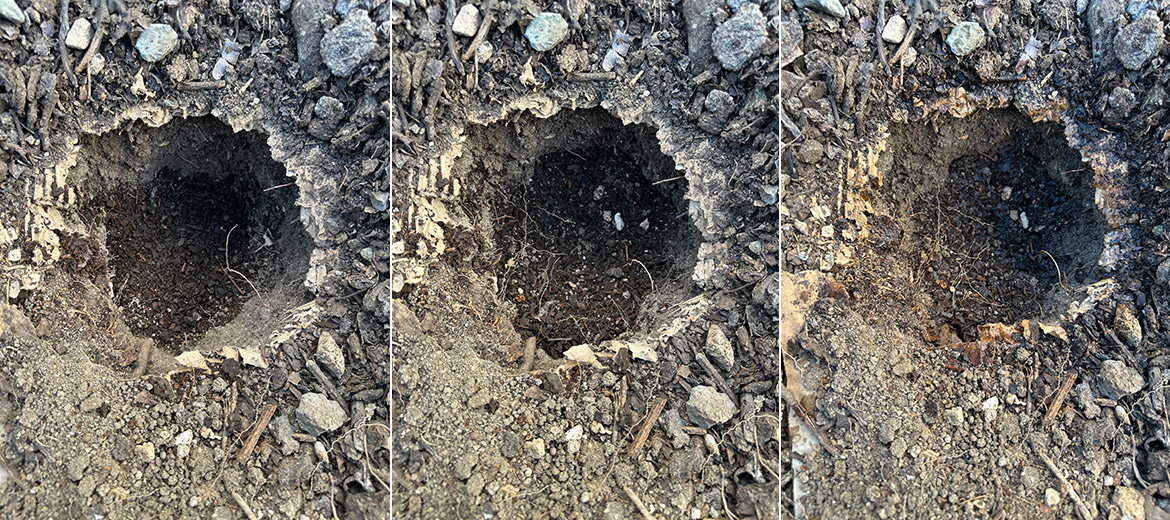
Next we prepped each hole by dropping in a handful of our compost, mixing it with the native soil, then lightly watering it in. The idea here was to provide a moist base of nutrients to greet the roots in their new home.
We then dropped each plant in a hole. Back filled each with a mixture of native soil and two handfuls of our compost, then lightly watered them in. We didn’t want to water in too heavily, since the peppers and soil were already moist at planting time. We just wanted to ensure good contact with the soil.
The plan moving forward is to monitor the soil moisture with our meter and water accordingly. We’ll start our liquid feed in a few weeks and feed them regularly every two weeks. And for protection against the insect predators, we’ll hit them once a week with a foliar spray of light neem oil solution.
And that’s it. The Pepper Project is underway. No tilling, no chemicals, just compost and compost-like inputs.
Success or failure, we’ll document every step along the way. We’re just as interested to see the results as you are.
Next up: First day observations.